
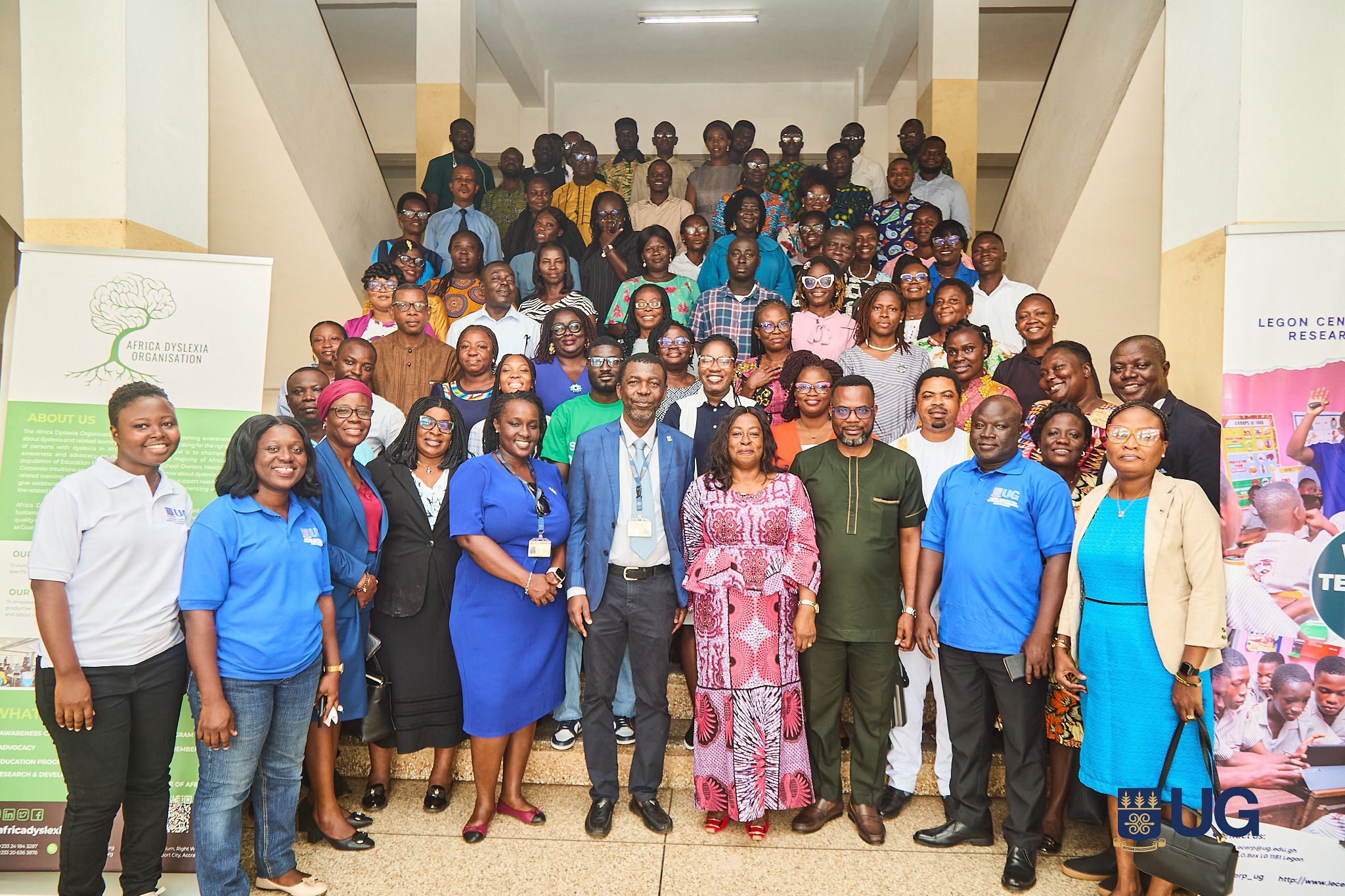
A group photograph of officials and participants at the celebration
The Legon Centre for Education Research and Policy (LECERP) held its maiden celebration of the World Teachers’ Day at the University of Ghana on 6th October, 2025.
The collaboration with the Africa Dyslexia Organization and the Ghana Education Service-La-Nkwantanang Madina Municipal Education Directorate was celebrated under the theme, “Beyond Chalkboards: AI Usage, Dyslexia Awareness, and Teachers Driving Change.”
The event brought together educational officers, heads of schools, teachers, school improvement officers, and facilitators from the La-Nkwantanang Madina Municipality, alongside faculty and staff of the University of Ghana. The day’s programme blended celebration with professional development, encouraging teachers to embrace technology and inclusivity in education.
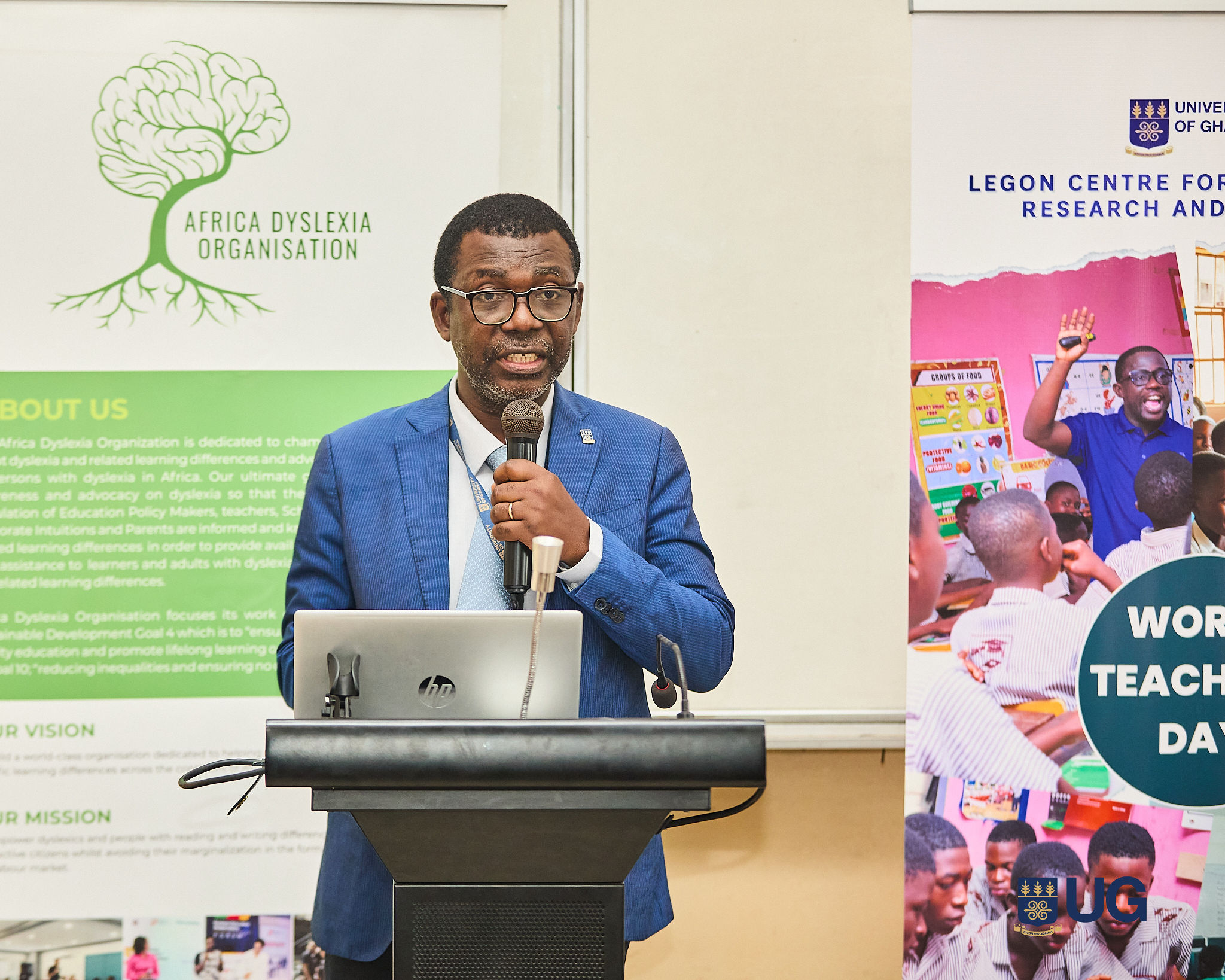
Dr. Clement Adamba, delivering his welcome address.
In his welcome address, Dr. Clement Adamba, Director of the Legon Centre for Education Research and Policy (LECERP), expressed appreciation to all collaborators and participants for their presence and support of this maiden celebration. He noted that World Teachers’ Day offers a timely opportunity not only to celebrate teachers but also to empower them with evolving knowledge in areas such as artificial intelligence (AI) and inclusive education, particularly dyslexia awareness.
Dr. Adamba emphasized that LECERP continues to fulfill its mandate of conducting leading research and using evidence from that research to design and deliver targeted training, capacity-building initiatives, and policy recommendations. He remarked:
“As the research wing of the College of Education, University of Ghana, our mandate is to bridge the gap between research and policymaking — transforming research findings into actionable evidence that empowers educators, informs decision-makers, and inspires meaningful change.”
He concluded that the maiden World Teachers’ Day celebration reaffirmed LECERP’s commitment to advancing policies and practices that empower teachers to lead the transformation toward a more inclusive and technology-enabled education landscape. He reminded participants that every great nation is built on the dedication of its teachers, whose daily impact shapes the future of generations.

Prof. James Dzisah delivering the opening remarks at the event.
Delivering the opening remarks on behalf of the Provost of the College of Education, Prof. James S. Dzisah, Dean of the School of Education and Leadership, commended teachers for their unwavering commitment and sacrifice in shaping the minds of future generations. He stated that the event aligns with the university's commitment to its strategic plan 2024-2029, particularly the Strategic Priority 2- Impactful Research, and Strategic Priority 4- Engagement and Partnerships.
Prof. Dzisah observed that the chosen theme was highly relevant in today’s educational landscape, as teachers must now adapt to the realities of AI and other emerging technologies. He noted that these innovations should not be seen as threats, but rather as tools to enhance teaching and learning. “I am proud to stand with educators who not only impart knowledge, but also pioneer new methods, advocate for diverse learners and model resilience in the face of change,” he said.

Ms. Harriet Lomotey, addressing participants.
Delivering her remarks, Ms. Harriet Lomotey, Director of Education for the La Nkwantanang Madina Municipal, urged teachers to see the integration of AI not as a replacement for their expertise, but as a tool to enhance their instructional delivery. She also underscored the importance of understanding and supporting learners with special educational needs.
Mr. Joseph Oduro Nkansah, speaking at the celebration.
Speaking at the celebration, Mr. Joseph Oduro Nkansah, Registrar of the College of Education noted that in an era where knowledge continues to evolve, it is critical for teachers to constantly upgrade their skills and integrate new technologies into their teaching. “We need to see AI and other instructive technologies not as a replacement for teachers and officers, but rather complementary to what we are doing,” he added.
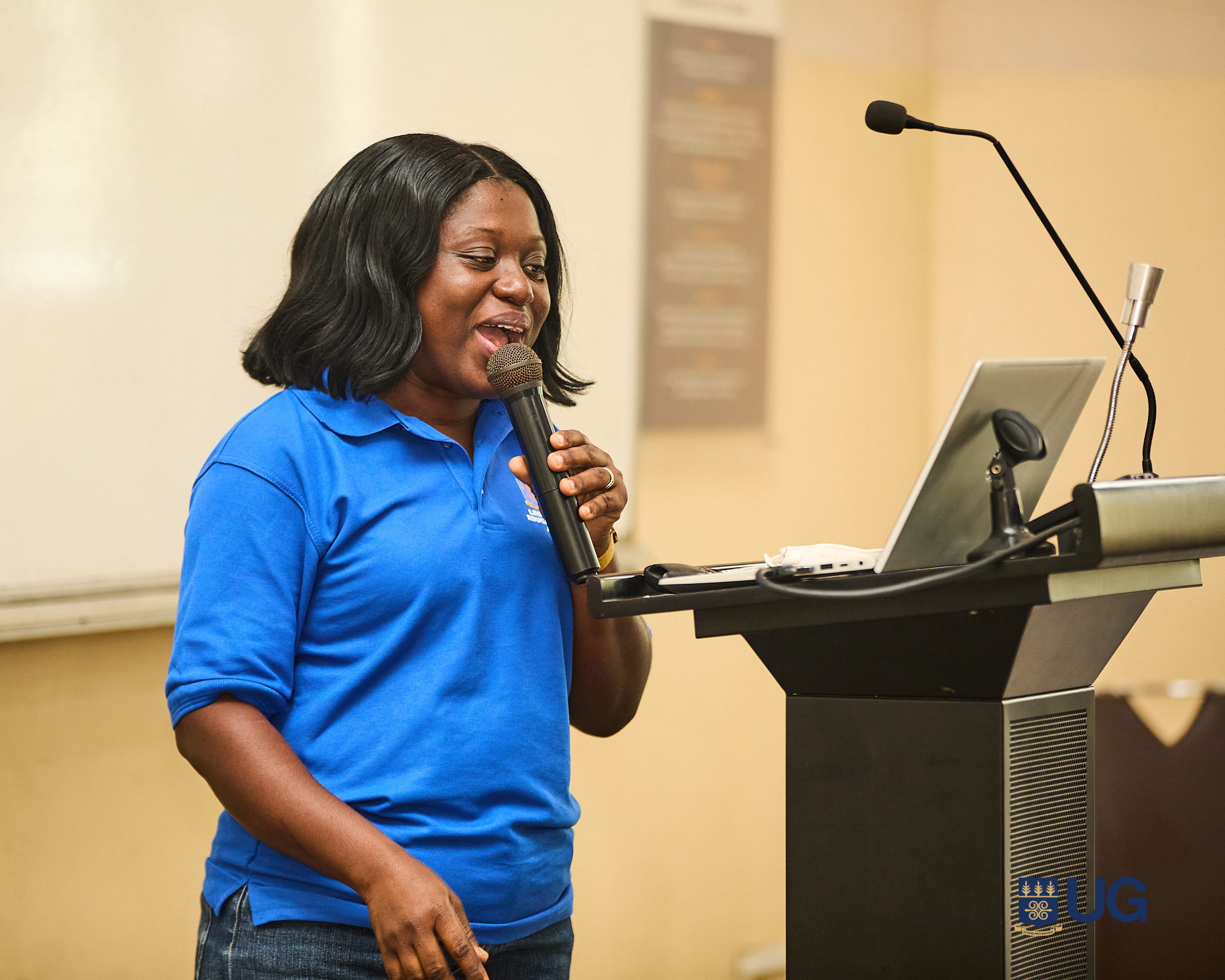
Dr. Freda Osei Sefa, delivering her presentation
Dr. Freda Osei Sefa, a Research Fellow at LECERP presented preliminary findings from a study titled “Enhancing Teaching and Learning with Artificial Intelligence Technologies: Exploring the Attitudes and Perceptions of Basic School Teachers in Ghana.”
The study, conducted in both public and private schools nationwide, examined teachers’ awareness, beliefs, and attitudes toward AI. The findings of the study revealed that AI awareness in Ghana is high, with many teachers already using platforms such as Meta AI, ChatGPT, and Copilot for lesson preparation and administrative tasks.

A cross-section of participants at the celebration
However, the study also identified challenges that may hinder the use of AI by teachers. These included inadequate training, infrastructure deficits, and psychological barriers such as fear of job loss. Dr. Osei Sefa recommended strengthening continuous professional development, promoting AI awareness and confidence, and developing a policy framework for ethical and effective AI use in schools.
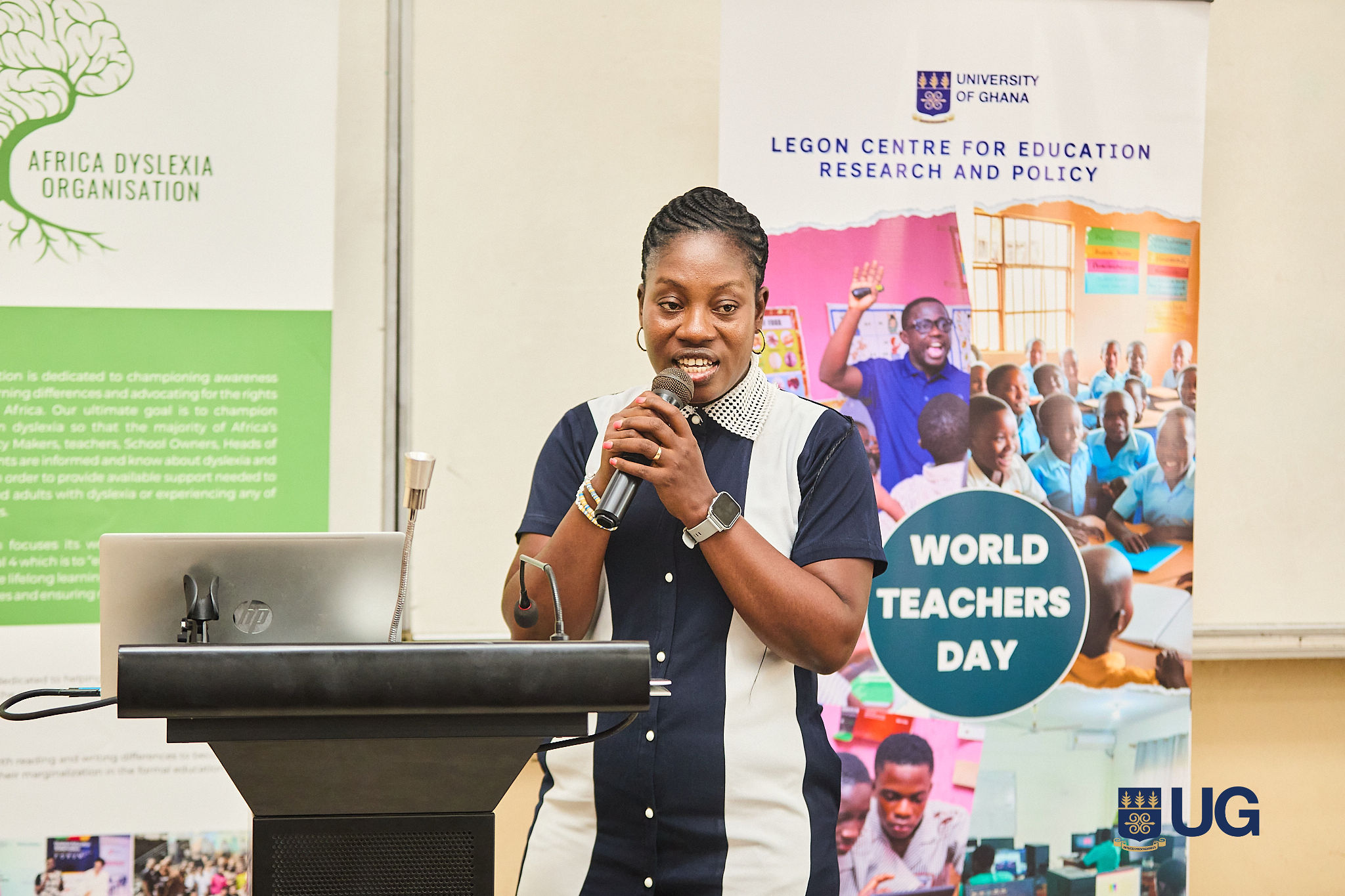
Dr. Gifty Rockson engaging with participants.
Dr. Gifty Rockson of the Africa Dyslexia Organization led an enlightening discussion on understanding dyslexia. She debunked common myths that label some pupils as “lazy” or “uninterested” in school, clarifying that dyslexia is a specific learning difference affecting reading, writing, and spelling. She emphasized that dyslexia should alert teachers to the child’s processing difficulties rather than to a lack of effort. The session encouraged teachers to create supportive environments and adopt multisensory and visual teaching strategies that accommodate learners’ diverse needs.
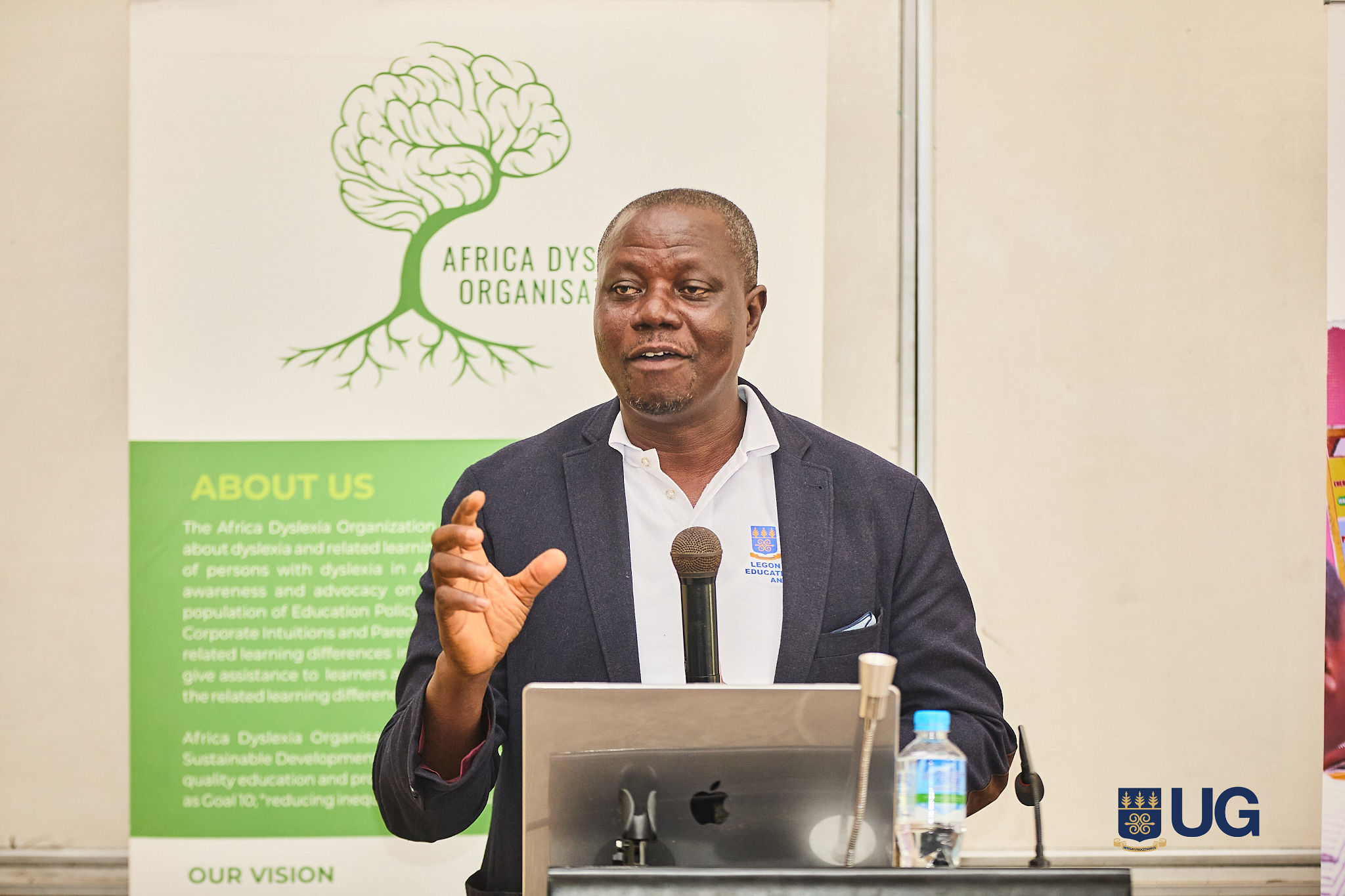
Dr. Gideon Anapey speaking to participants during the practical session.
Dr. Gideon Anapey, a resource person at LECERP, led a practical session demonstrating the application of AI and digital tools for teaching, assessment, and school management. He encouraged teachers to link technology with curriculum delivery, emphasizing that quality learning is interactive learning. He demonstrated how tools such as cloud computing and spreadsheets could be used to design lesson plans, track attendance, and manage school data.
Dr. Anapey called for a shift from rote memorization to creativity and individualized instruction, enabling learners to explore and generate knowledge. He added that teachers must acquire IT skills to meaningfully integrate technology into their classrooms and use digital tools to support children with dyslexia, who often learn best through visual and conceptual aids.

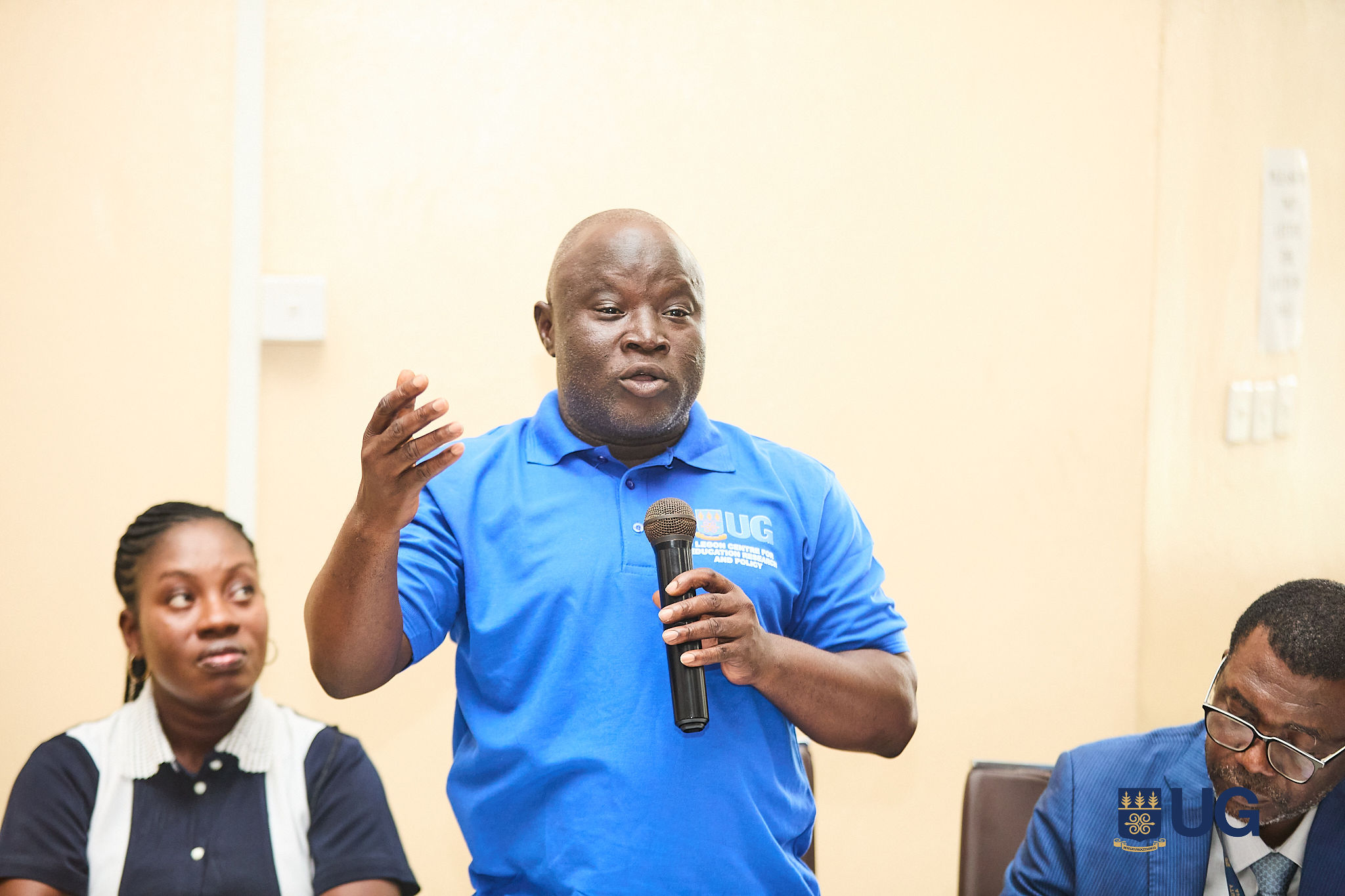
A participant asking a question.
The interactive Q&A session provided participants an opportunity to ask questions, share experiences, and offer suggestions. Teachers discussed challenges they face in integrating AI, shared innovative classroom practices, and expressed appreciation for the insights on dyslexia.

Mr. Baidoo delivering the closing remarks.
In his closing remarks, Mr. Joseph Baidoo, Head of Finance and Administration, who spoke on behalf of the Director of Education, reaffirmed the Directorate’s commitment to collaborating with LECERP and other educational partners to strengthen teacher training in technology integration and inclusive education. He urged teachers to apply the lessons learned in their classrooms and to continue inspiring learners to reach their potential.
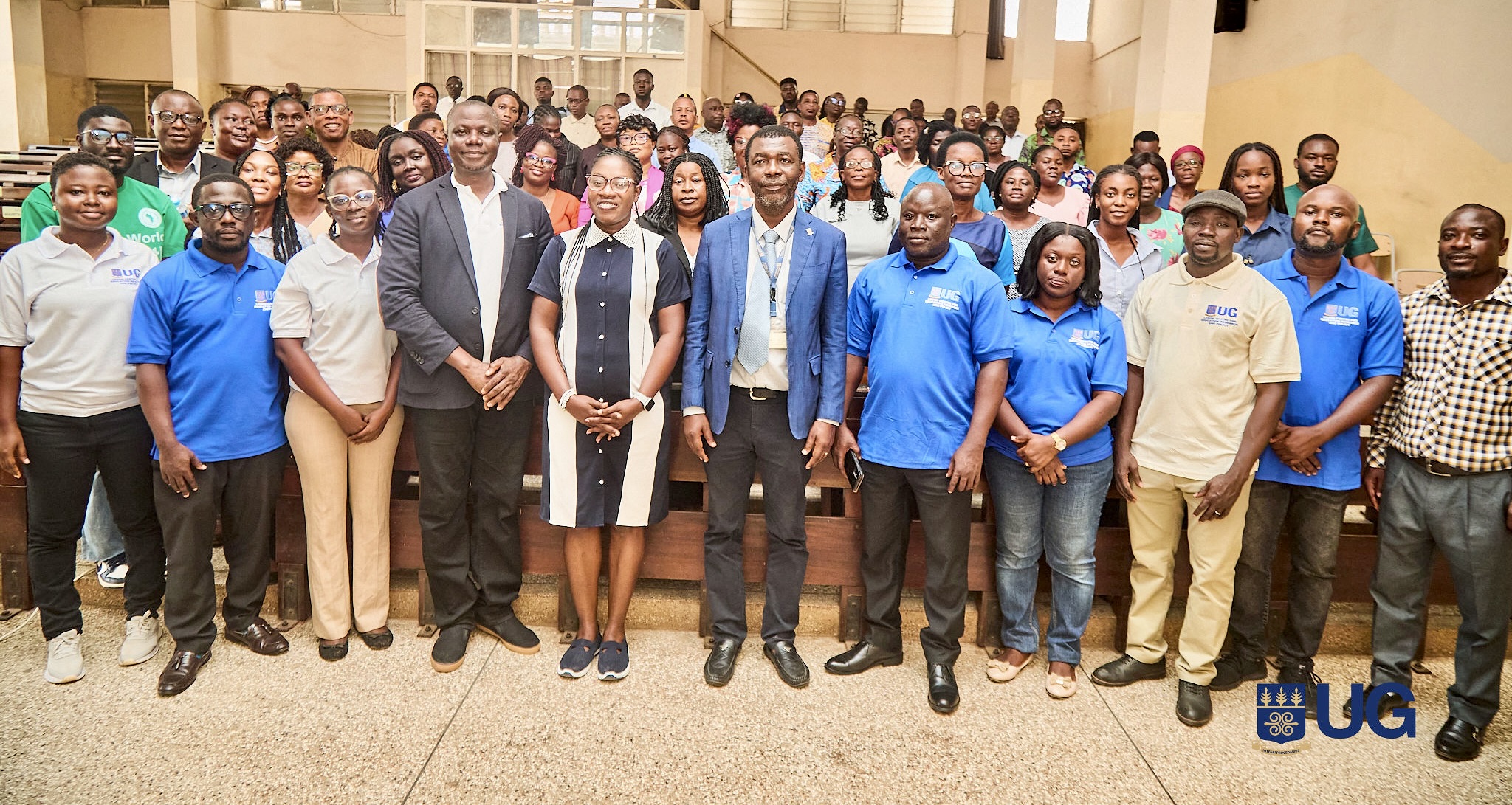
Teachers who attended the celebration expressed enthusiasm about the sessions, describing them as both enlightening and transformative. A major highlight for many was the session on supporting learners with dyslexia, which deepened their understanding of individualized instruction. One participant remarked, “I have acquired knowledge on dyslexic children and how to support them.”
The participants were equally inspired by the discussion on Artificial Intelligence (AI) and its role in modern teaching. A teacher shared her thoughts, “I have gained knowledge on how to use AI as a tool to facilitate learning.”
The sessions on digital literacy and innovative pedagogy also resonated strongly with participants. As one teacher reflected, “I have realized that all students cannot be treated the same in terms of academics.”
Overall, the programme heightened teachers’ awareness of inclusion and equity in education, encouraging them to adopt lessons to meet diverse learning needs. Summing up this sentiment, a participant stated, “I have seen the need to support learners with learning difficulties.”