
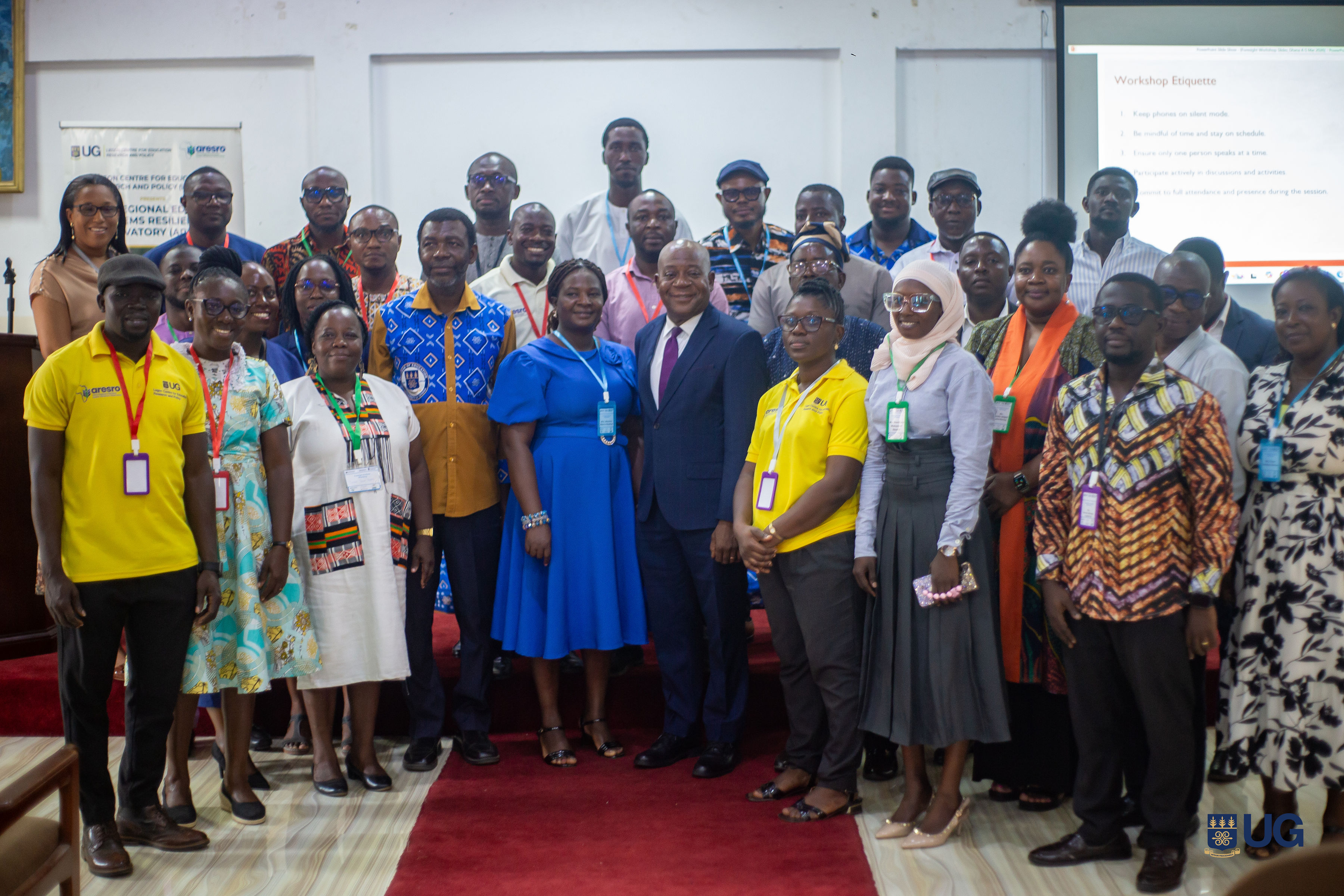
Participants with officials from the University of Ghana
The Legon Centre for Education Research and Policy (LECERP) has taken a major step toward advancing long-term resilience of Ghana’s education system with the organisation of a Foresight Analysis Workshop as part of the Africa Regional Education Systems Resilience Observatory (ARESRO) project.
ARESRO is funded by the International Development Research Centre (IDRC) and seeks to enhance education system resilience in 42 Global Partnership for Education (GPE) countries in Africa. ARESRO is coordinated by the Resilient African Network at the School of Public Health at the Makerere University in Uganda and LECERP serves as the hub overseeing the research in Anglophone West Africa – namely the Gambia, Ghana, Liberia, Nigeria, and Sierra Leone.
The ARESRO project represents a major investment in Ghana’s capacity to build evidence-based and forward-looking education policy. As the country navigates complex development challenges—including rapid urbanisation, climate vulnerability, demographic transitions, and digital transformation—the ability to anticipate and prepare for future disruptions in education is increasingly critical.
The two-day workshop, held from 4th -5th March, 2026 at the Institute of African Studies, University of Ghana, brought together key stakeholders in Ghana’s education ecosystem including representatives from the Ministry of Education, the Ghana Education Service, academia, civil society organisations, private school representatives, development partners, teacher associations, teachers, and student leaders. Over 30 participants engaged in structured foresight exercises designed to identify priority domains of risk, envision desirable futures for education, and co-design pathways for systemic transformation of Ghana’s education system.
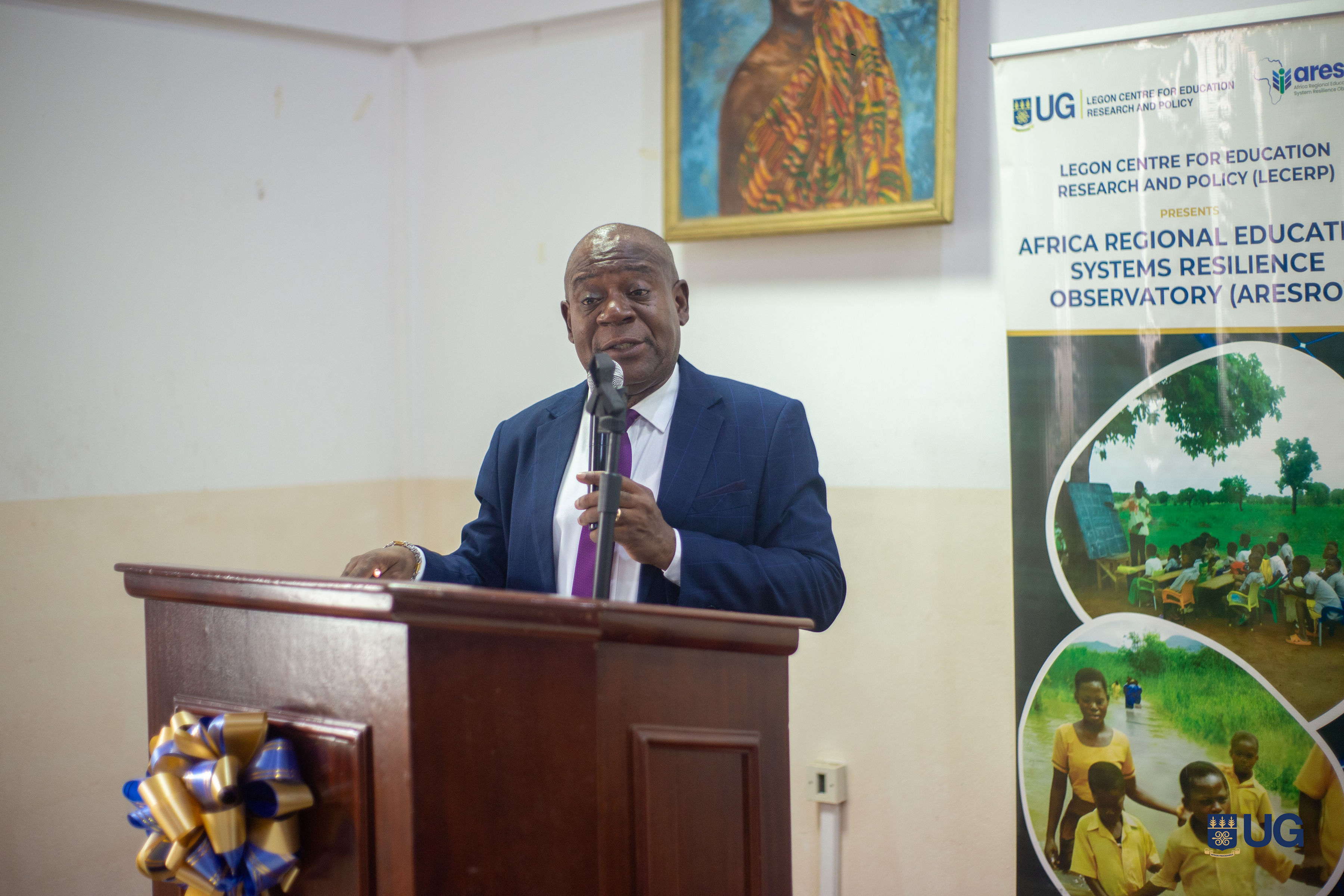
Prof. Samuel Nii Ardey Codjoe addressing participants at the workshop.
The workshop was officially opened by Prof. Samuel Nii Ardey Codjoe, Provost of the College of Education at the University of Ghana, who framed the urgency and ambition underpinning the ARESRO initiative. Recalling the official launch of the project in June 2025, the Provost noted that global thinking on education system resilience has evolved beyond simple crisis recovery. He explained that resilience now encompasses the ability of education systems to anticipate, absorb, adapt, and transform in the face of adversity—requiring a shift from reactive responses to proactive and strategic foresight that will integrate preventive and transformative efforts to minimize the likelihood that stressors will result in shocks.
Prof. Codjoe further highlighted the establishment of LECERP as the first dedicated research centre of the College of Education. Since its creation, the Centre has contributed policy papers on Ghana’s Free SHS programme, published policy briefs on school violence and WASSCE performance, and begun work on a comprehensive State of Education in Ghana report. The College’s forthcoming Digital Youth Hub, which focused on digital technologies across sectors such as finance, health, education, retail, and agriculture, was also cited as evidence of the institution’s forward-looking commitment.The Provost called on participants to ensure that the workshop’s outcomes translate into practical tools capable of strengthening contingency planning, improving the use of education data, protecting vulnerable learners, and reducing learning poverty across the region.
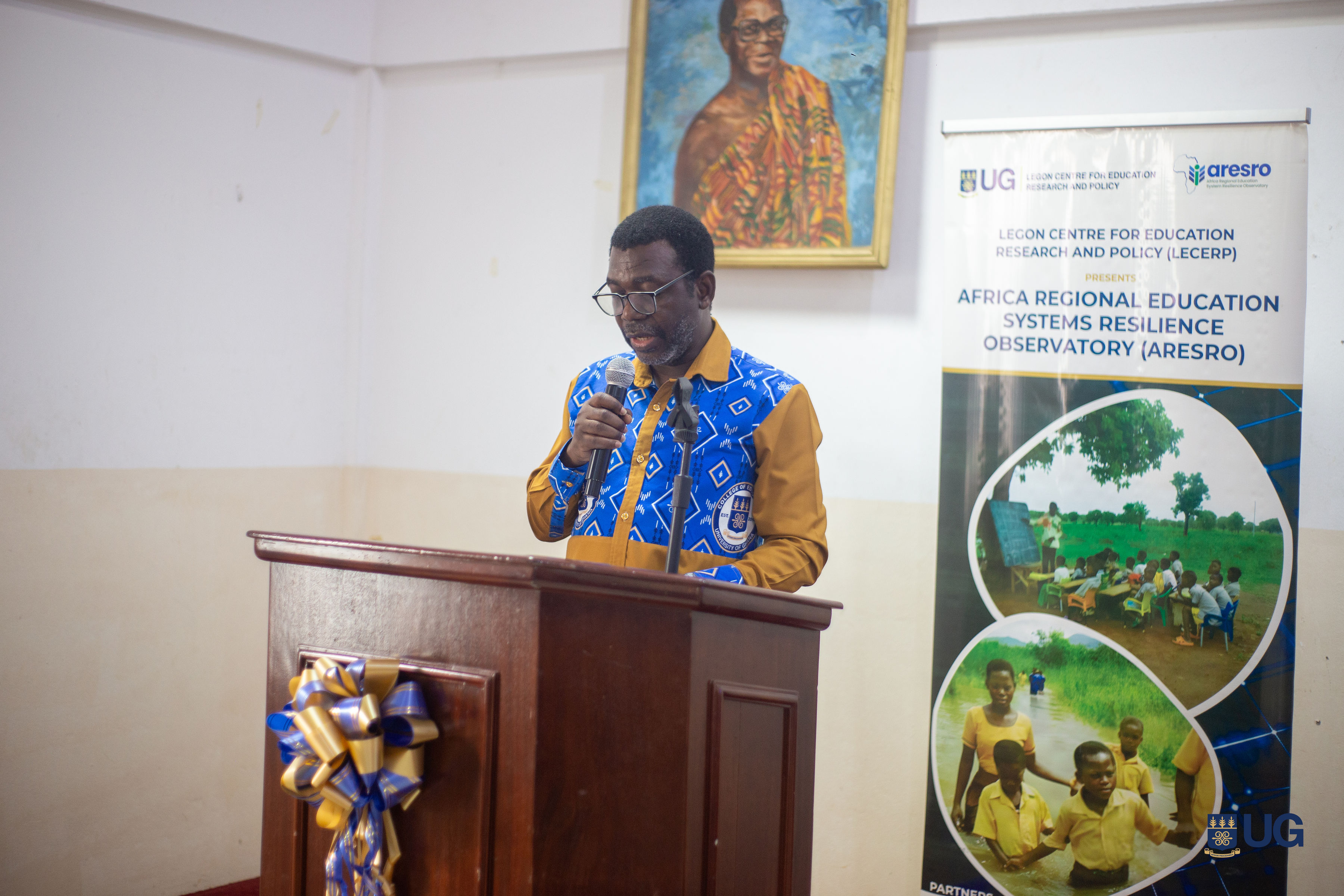
Mr. Joseph Oduro Nkansah delivering his remarks during the workshop.
Contributing to the discourse, Mr. Joseph Oduro Nkansah, Registrar of the College of Education, emphasised the importance of collaboration in building resilient education systems. Reflecting on developments since the launch of the ARESRO project, he expressed confidence that the work undertaken so far is already shaping a clearer direction for Ghana’s education system.“Resilience is built through partnerships,” he noted. Mr. Nkansah commended the broad cross-section of stakeholders gathered for the workshop and encouraged participants to engage fully in the discussions with the shared goal of building an inclusive, lifelong, and adaptive education system capable of responding to both present and future societal needs.
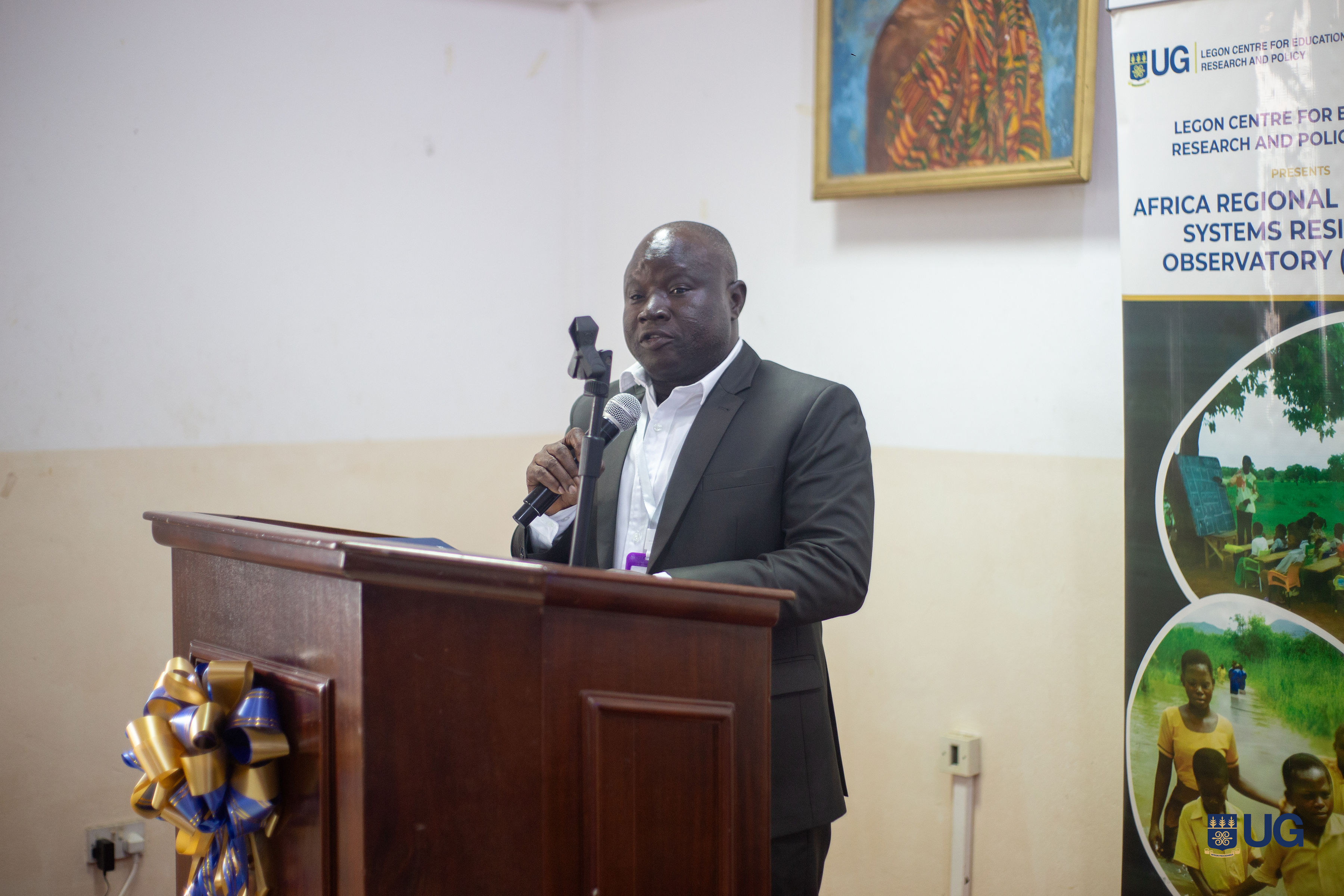
Dr. Clement Adamba addressing participants during the workshop.
Earlier in his welcome address, Dr. Clement Adamba, Director of LECERP, provided a detailed overview of the project’s structure, progress, and the objectives of the foresight workshop. Dr. Adamba explained that the ARESRO project is being implemented by LECERP as part of a broader continental initiative covering 42 countries across Africa.
The project is organised around three interrelated analytical components. The first phase consisted of a rigorous desk review followed by a formative assessment second phase in which policymakers and stakeholders were consulted on future trends in shocks, stressors, risks, and vulnerabilities likely to affect education systems over the next decades. “This foresight analysis workshop builds directly on this research,” Dr. Adamba explained. “Our goal is to collectively identify priority domains of shocks and stressors that may significantly affect our education systems.”
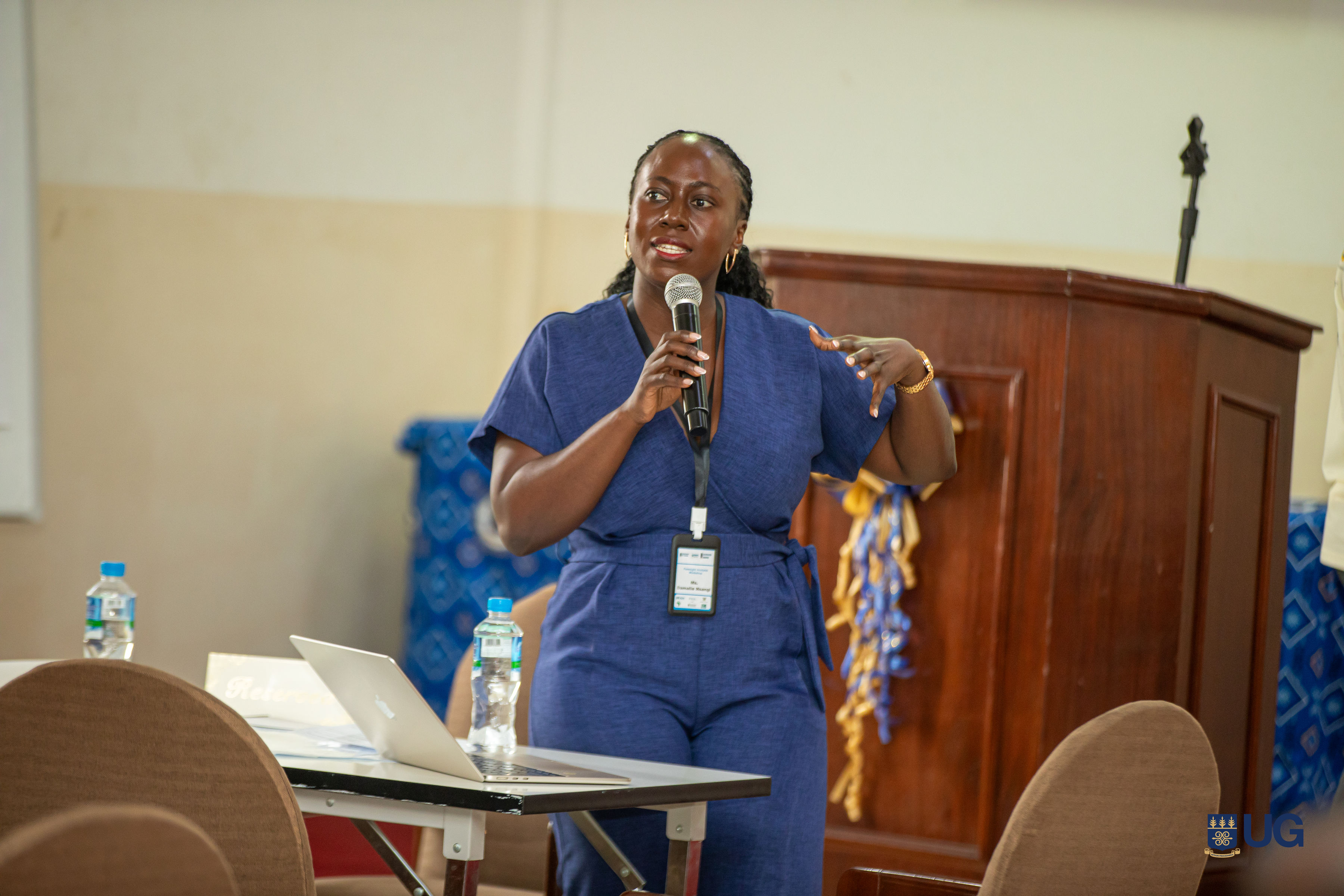
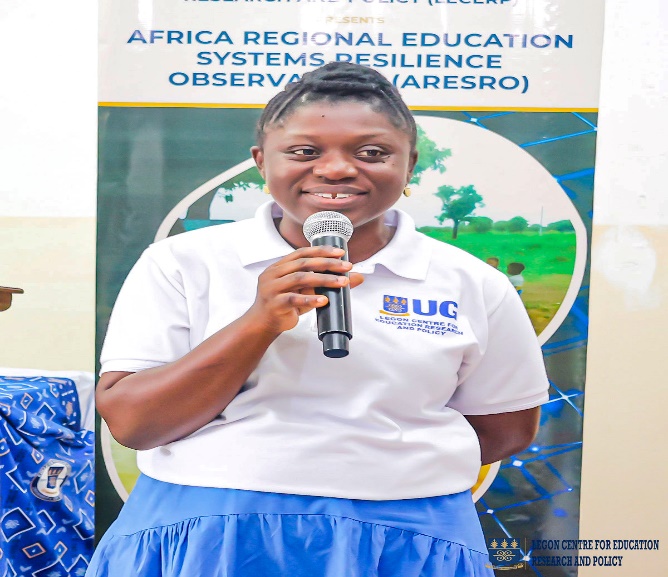
Ms. Damalie Nsangi speaking during the workshop.
Ms. Damalie Kajumba Nsangi, Project Manager at the Resilient Africa Network at Makerere University, highlighted the continental significance of the ARESRO initiative. Providing a background on the observatory, she noted that evidence on education system resilience across Africa remains limited, with much of the available research emerging in response to the COVID-19 pandemic. She therefore called for more proactive and deliberate efforts to document and strengthen resilience within education systems and their broader innovation ecosystems.
“What we are seeking to do today is to bring together the diverse portfolios represented here so that we can interact, exchange knowledge, and share experiences,” she said. She also highlighted Africa’s young population as the continent’s greatest asset and urged policymakers to ensure that education systems remain relevant to the needs of students and the broader development priorities of African societies.
The workshop was structured as a highly participatory two-day process comprising seven thematic blocks, each designed to build progressively on the previous one. Through a combination of historical reflection, creative visioning, and structured foresight methodologies, participants explored the evolution of Ghana’s education system and mapped pathways for its future transformation.
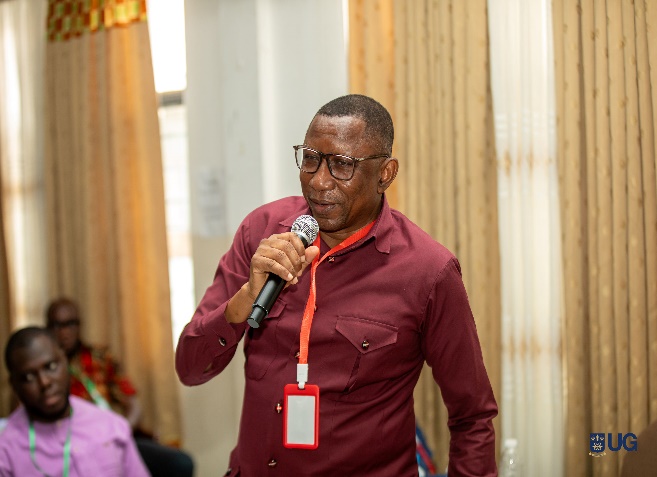
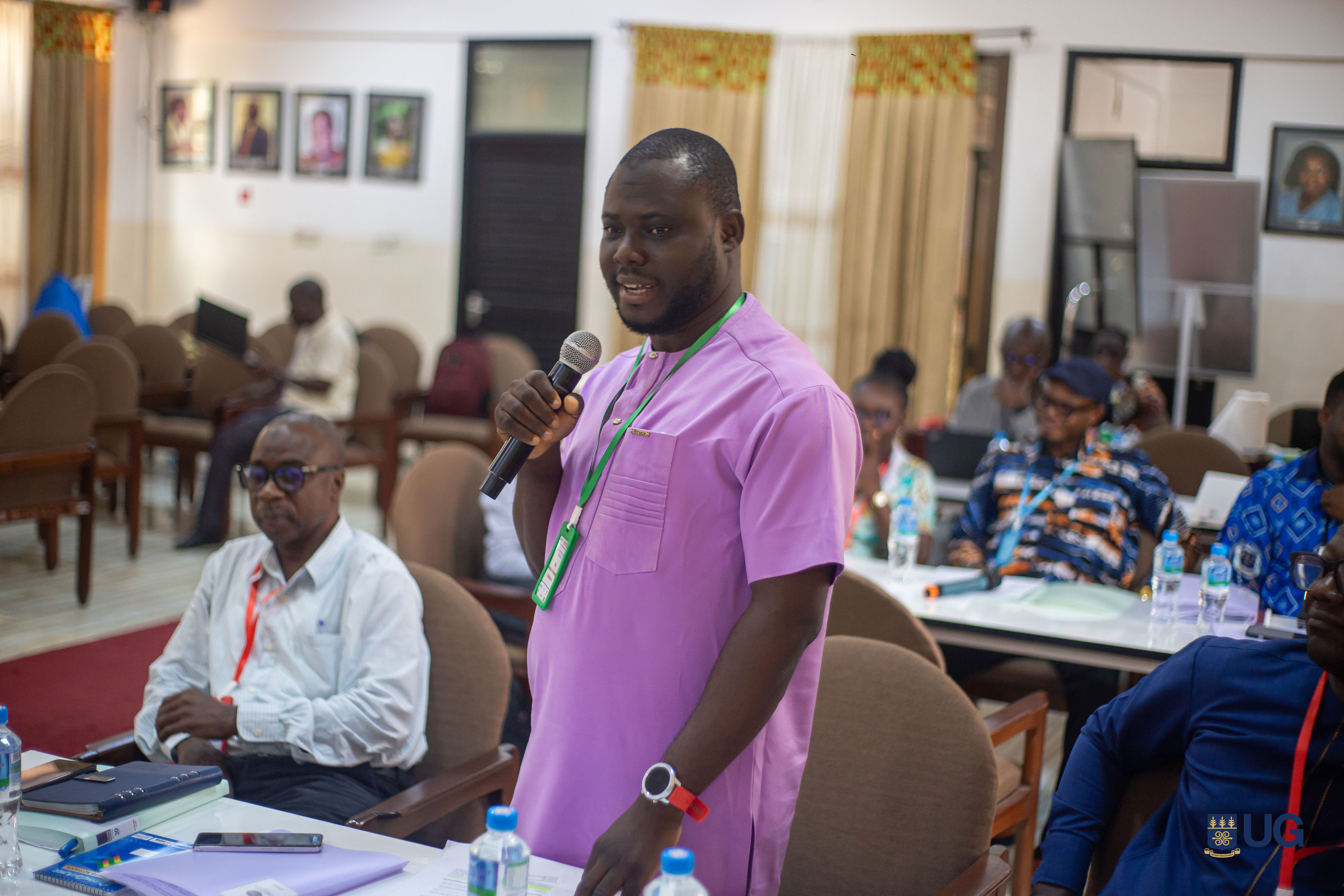
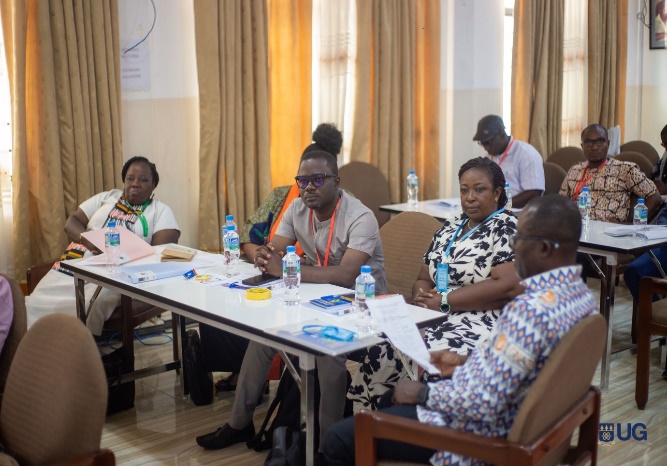
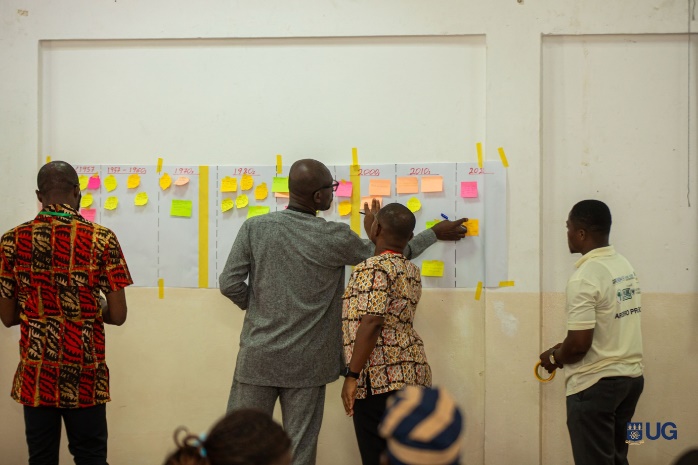
Excerpts of participants at the workshop
Dr. Frank Otchere, Co-Principal Investigator of the ARESRO project, delivered the workshop’s summary and next steps. He acknowledged the complexity of building resilient education systems and assured participants that the research team would compile and synthesise all discussions into a comprehensive workshop report for review and feedback. Dr. Otchere emphasised that the ultimate goal of the project is to develop a roadmap for an inclusive, sustainable, and resilient education system—one that ensures that every child has access to uninterrupted and quality learning, even in times of crisis.
In her closing remarks, Mrs. Bernice Mpere-Gyekye, Chairperson of the ARESRO Advisory Group, commended participants for their exceptional engagement throughout the two-day event. She informed participants that policy briefs emerging from the project will be shared as these outcomes carry important implications for Ghana’s long-term development: a more resilient education system means fewer disruptions to learning, greater equity in access and outcomes, and a workforce better prepared to contribute to national economic growth and social cohesion. Bottom of Form
The facilitators at the workshop included Dr. Joyce Anku, Co-Investigator on the project; Dr. Martin Wiredu Agyekum, Dr. Freda Osei-Sefa, and Dr. Innocent Agbelie, Research Fellows at the Legon Centre for Education Research and Policy.
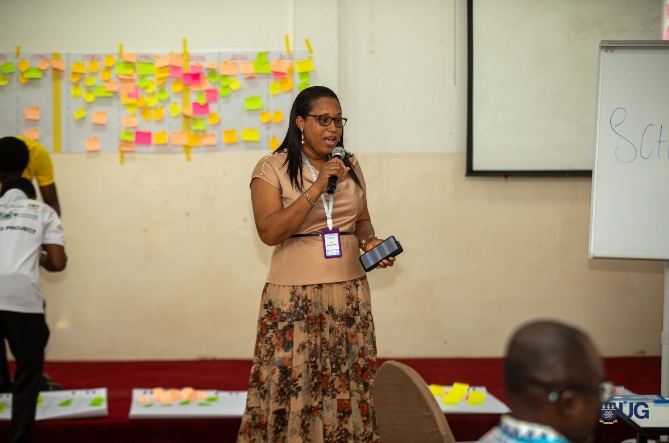
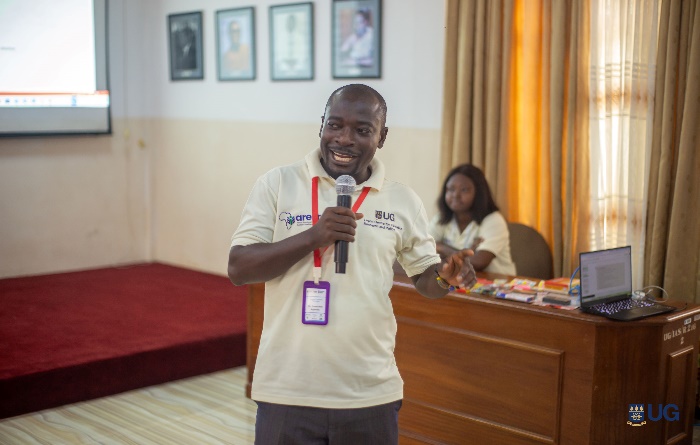
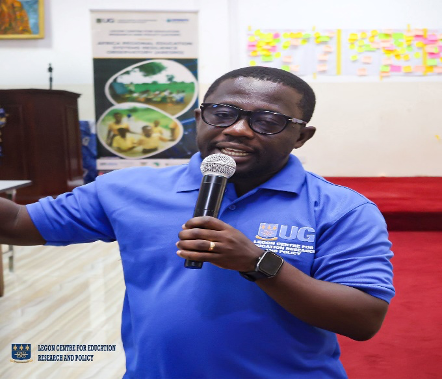
Dr. Joyce Anku, Dr. Innocent Agbelie, Dr. Martin Wiredu Agyekum and Dr. Freda Osei-Sefa facilitating different sessions during the workshop.