
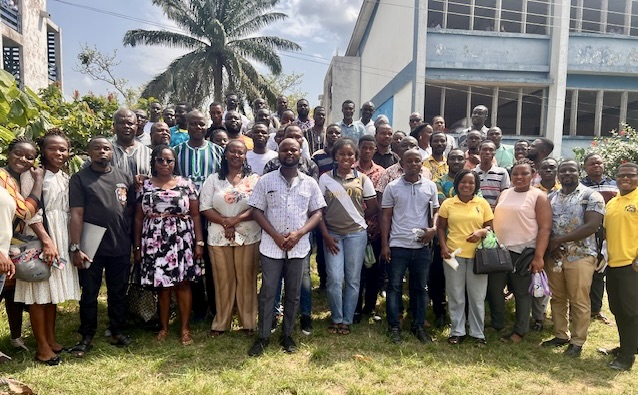
Members of the training team with teachers from Anum Presbyterian Senior High School.
The Legon Centre for Education Research and Policy (LECERP) has successfully conducted series of digital training workshops for teachers across three senior high schools in the Asuogyaman District. These workshops are a core component of the Leveraging Internet Access for Teacher Professional Development and Improved Student Learning Outcomes (LIATPD) project, an initiative launched in October 2024 with funding from the Internet Society Foundation (ISOC).
The intensive sessions, held between February 12 and February 18, 2026, took place at Adjena Senior High Technical (SHTS), Anum Presbyterian Senior High (SHS), and Akwamuman Senior High School (SHS). This latest round of training builds on earlier workshops held for teachers at Boso SHTS and Apeguso SHS.
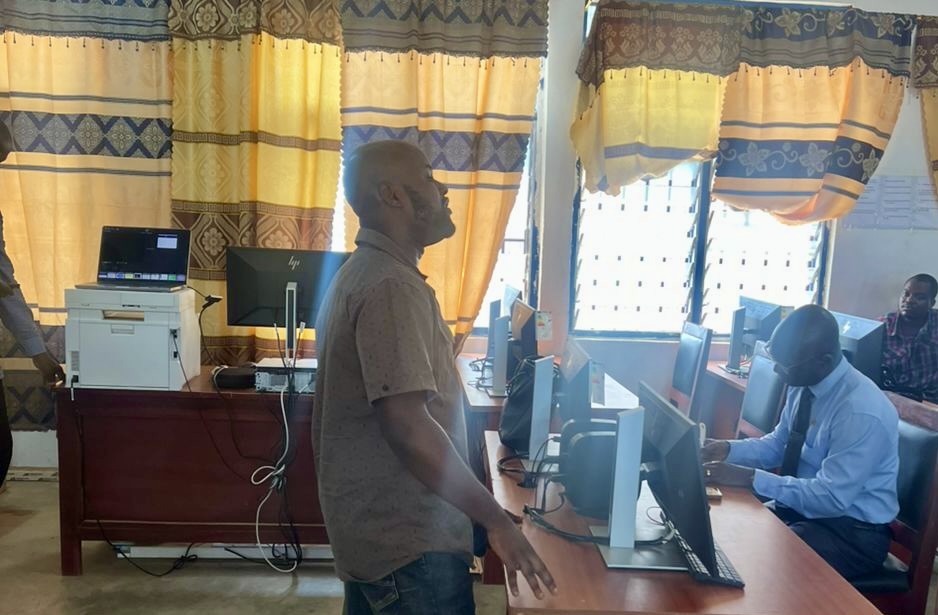
Mr. Addison addressing teachers at Adjena SHTS.
Delivering the opening remarks on behalf of the Principal Investigator-Dr. Hayford Ayerakwa, Mr. Richmond Addison, Principal Research Assistant stated that the primary mission of the LIATPD project is to explore how robust internet connectivity and digital literacy can transform educational quality. He indicated that the initiative has already provided computers and high-speed internet routers to the participating schools to improve campus-wide connectivity. He added that, beyond the provision of internet access and high-speed routers, the project also seeks to ensure that teachers possess the specialised skills to use these tools for high-quality instruction to improve learning outcomes. “The professional growth of our teachers in digital literacy is directly linked to better learning outcomes," Mr. Addison noted.
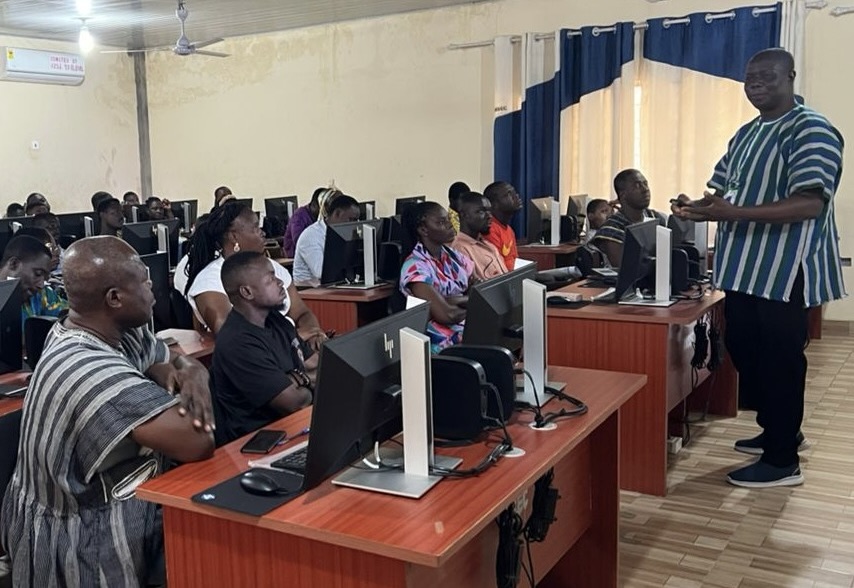
Dr. Gideon Anapey delivering a presentation.
The workshops were facilitated by Dr. Gideon Anapey, a Resource Person from LECERP. Dr. Anapey’s sessions focused on deepening the integration of ICT into the new standards-based curriculum. He encouraged teachers to shift from teaching about ICT to teaching with ICT, which he emphasised is a fundamental principle of the new standards-based curriculum.
Dr. Anapey further explained that knowledge already exists in the student’s traditional environment. He therefore entreated the teachers to apply ICT to repackage this indigenous knowledge to evoke student imagination, interest and curiosity. He used the opportunity to address critical growing concerns, such as student device addiction and exposure to explicit online content. He advised that students' exposure to digital tools and devices should be under strict supervision and rigorous content management to mitigate the negative impacts of such exposures on their health and academic performance.
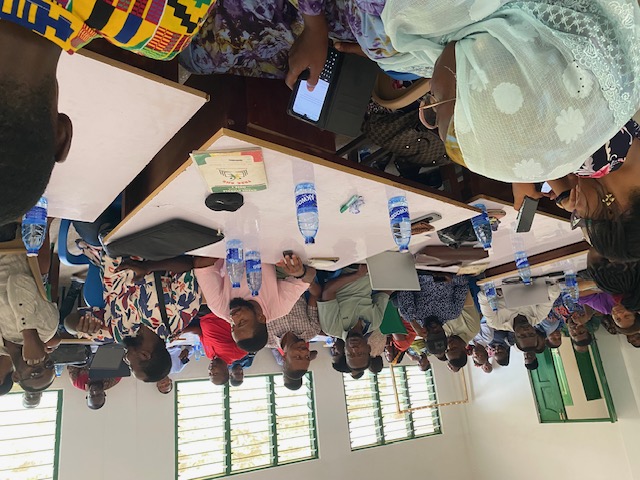
Some participants performing various tasks during the practical session.
He led the participants through a practical, hands-on demonstration of integrating digital tools into the classroom environment. The session covered a range of resources, including Microsoft Word and Google Sheets for documentation, data management and student assessment, AI-powered test item generators for efficient assessment creation, and specialised STEM platforms such as Khan Academy.
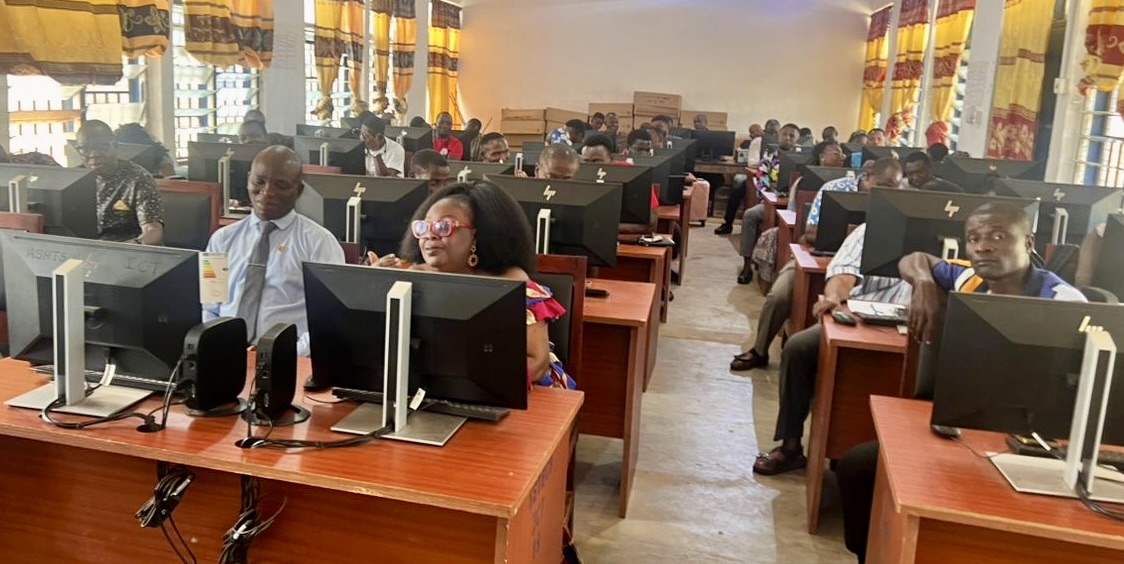
A cross-section of teachers at the training.
Consistent with the successful model established during the first round of training, each participating school again appointed two Internet Change Champions (ICCs) to ensure the project's long-term sustainability. These designated teachers are slated for advanced, specialized training that will empower them to serve as on-site peer mentors. By providing ongoing support, the ICCs will help colleagues seamlessly incorporate digital tools into their daily lesson plans and delivery, maintaining the programme's momentum well beyond the conclusion of the project.
Teachers who participated in the training described the experience as "transformative" and a "game changer" for their curriculum planning, lesson delivery and assessment creation. Many reported a perceived improvement in their digital self-efficacy and a renewed commitment to teaching with ICT tools and resources to better support students’ learning experiences.
The leadership of the participating schools expressed profound gratitude to the training team, calling for continued partnerships to modernize the learning experience for students. As the LIATPD project continues its rollout, LECERP remains committed to monitoring the impact of these digital interventions on teacher and student performance levels across the project schools.