
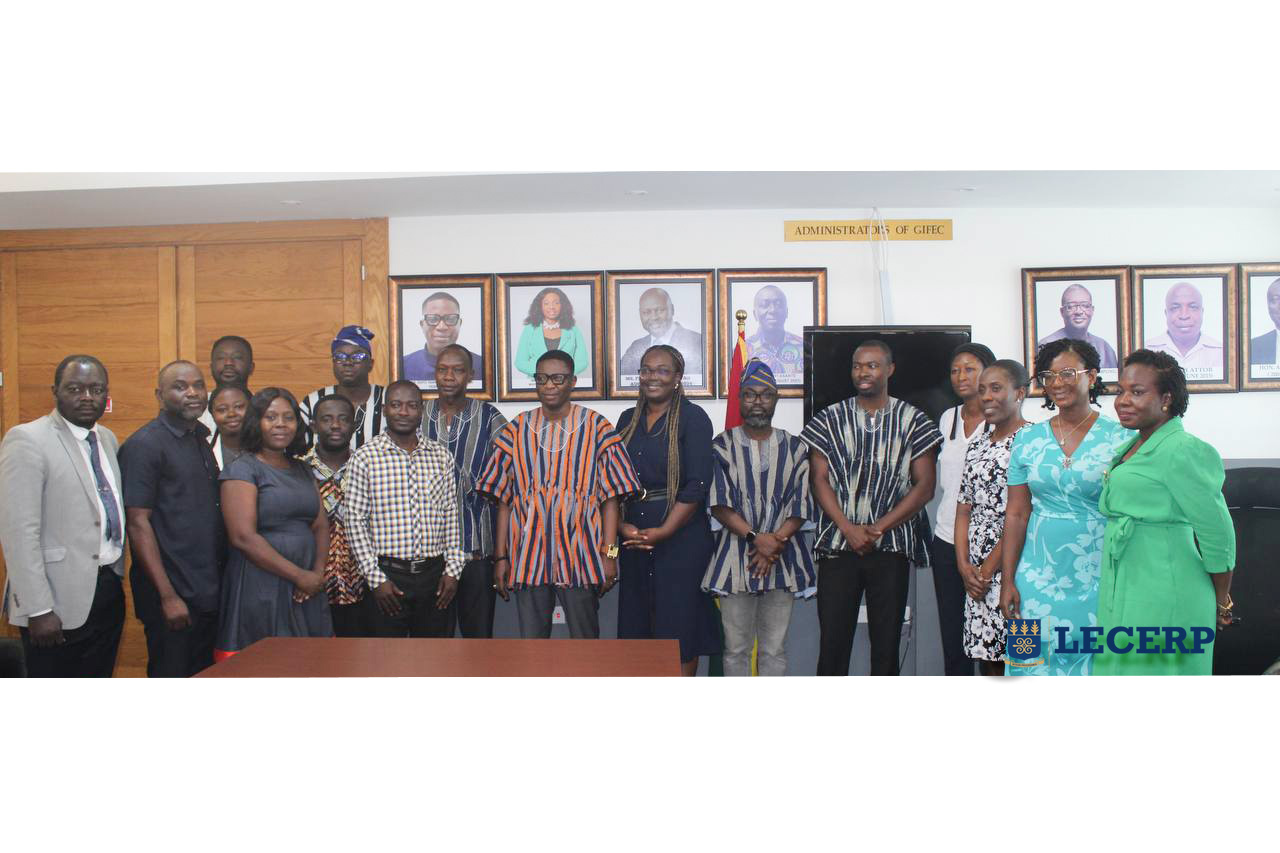
Researchers from LECERP with the Administrator of GIFEC (in orange fugu) and other officials at the meeting
The Legon Centre for Education Research and Policy (LECERP) has presented the findings of a Comprehensive Impact Assessment of Ghana Investment Fund for Electronic Communications (GIFEC) programmes and projects across the country. The findings were presented during a stakeholder validation workshop organised by GIFEC to review the outcomes of the independent evaluation.
The assessment marks an important milestone for GIFEC since its establishment. One of GIFEC’s core mandates is to periodically conduct impact assessments of its interventions across the country in order to evaluate their effectiveness and inform future policy and programme decisions. The key initiatives assessed by LECERP include rural telephony and connectivity initiatives, cyber laboratories, and ICT capacity-building programmes. The validation workshop provided a platform for stakeholders to review, refine, and validate the findings ahead of the publication of the final report.

Mr. Sofo Tanko Rashid-Computer, Administrator of GIFEC speaking during the workshop.
Speaking at the event, the Administrator of GIFEC, Mr. Sofo Tanko Rashid-Computer, emphasized the importance of the assessment in enhancing accountability and improving programme effectiveness. He noted that undertaking a comprehensive and independent evaluation is essential to ensure GIFEC’s initiatives remain relevant, efficient, and responsive to the needs of underserved and unserved communities. He described the validation workshop as a significant milestone and expressed confidence that LECERP’s findings would provide valuable insights into both the strengths and gaps in GIFEC’s interventions. He also expressed his appreciation to LECERP for its professionalism and to GIZ for its continued support toward Ghana’s digital transformation agenda.

Nana Akyaa Amoah-Amissah, Deputy Administrator of GIFEC, delivering her remarks.
Earlier, Nana Akyaa Amoah-Amissah, Deputy Administrator of GIFEC, underscored the importance of tracking measurable outcomes and sustaining impact through well-designed digital inclusion projects. She expressed hope that the findings and recommendations would support the delivery of more targeted, sustainable, and inclusive programmes for underserved communities.

Alhaji Yahaya Zakaria Osman, Director of Operations at GIFEC
Further, the Director of Operations at GIFEC, Alhaji Yahaya Zakaria Osman, reiterated that the assessment forms part of the Fund’s universal access and service obligations. He encouraged candid stakeholder feedback, emphasizing that the results would be instrumental in strengthening implementation strategies and improving sustainability.
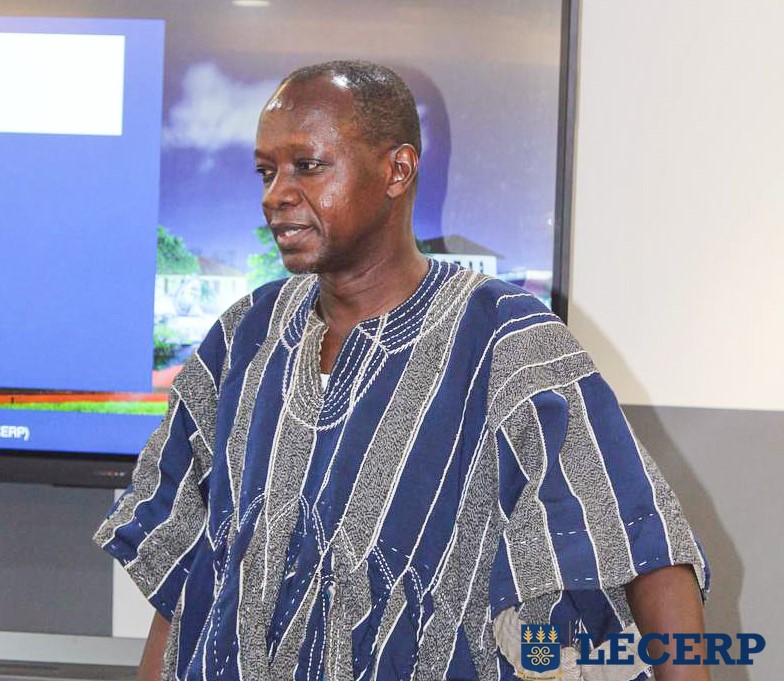
Dr. Suleman Musah, Head of Research at GIFEC briefing officials at the workshop.
Providing an overview of the study, Dr. Suleman Musah, Head of Research at GIFEC, described the assessment as timely and critical for enhancing programme effectiveness. He noted that periodic evaluations help promote accountability, refine implementation, and ensure that digital inclusion initiatives reach marginalised and underserved populations.

Dr. Martin Wiredu Agyekum (left), a Research Fellow at LECERP giving a presentation on the profile of LECERP
Delivering introductory remarks on behalf of the Director of LECERP, Dr. Martin Wiredu Agyekum, Research Fellow at LECERP thanked GIFEC for the opportunity to lead the nationwide assessment. He noted that the study aligns with the University of Ghana’s Strategic Priority 2 (Impactful Research) and Strategic Priority 4 (Engagements and Partnerships), and commended GIFEC and GIZ for their confidence in LECERP’s research capabilities.

Dr. Innocent Agbelie, a Research Fellow at LECERP presenting the findings at the workshop.
Presenting the draft technical report, Dr. Innocent Agbelie, Research Fellow at LECERP, explained that the study incorporated field surveys and stakeholder interviews across selected regions. The assessment evaluated the impact of GIFEC-funded initiatives on women, youth, people in rural communities, and small businesses. The study also examined operational challenges affecting programme efficiency and assessed the sustainability of funded projects, particularly regarding maintenance and long-term viability.
While acknowledging GIFEC’s progress in expanding digital access and supporting livelihoods, he stressed the need for further improvement in strengthening governance, ownership, and asset accountability at beneficiary sites, and closing the operational expenditure gap with a clear operations and maintenance financing model to deepen and sustain impact.
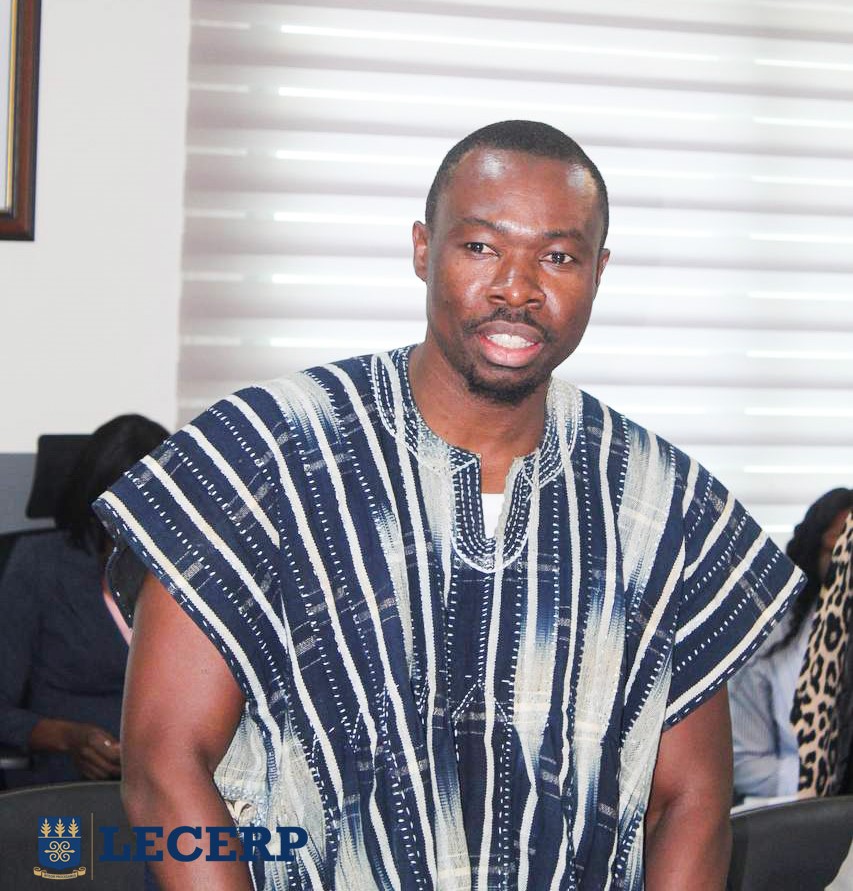
Mr. Walter Dzimey, Technical Advisor at GIZ.
Representing GIZ Ghana, Mr. Walter Dzimey, Technical Advisor, reaffirmed the organisation’s commitment to supporting Ghana’s digitalisation efforts. He noted that, with support from the German Federal Ministry for Economic Cooperation and Development through GIZ, the study seeks to enhance digital adoption and strengthen small and medium-sized enterprises. He expressed optimism that the findings would inform sustainable investments and generate measurable societal benefits.
The participants at the validation workshop who included beneficiaries and institutional stakeholders, engaged in discussions to review the findings and offer input to strengthen the final report.
Present at the meeting were officials from the Ministry of Communications, Digital Technology and Innovations, GIFEC, National Communications Authority, Data Protection Commission, Cyber Security Authority, Ghana-India Kofi Annan Centre of Excellence on ICT, National Information Technology Agency, Ghana Domain Name Registry, ATC Tower Ghana Limited, Huawei Technologies Ghana, S.A. Ltd, MTN, AirtelTigo, Telecel, Ascend Digital Solution, World Bank Ghana Office, MasterCard Foundation, United Nations Development Fund.