
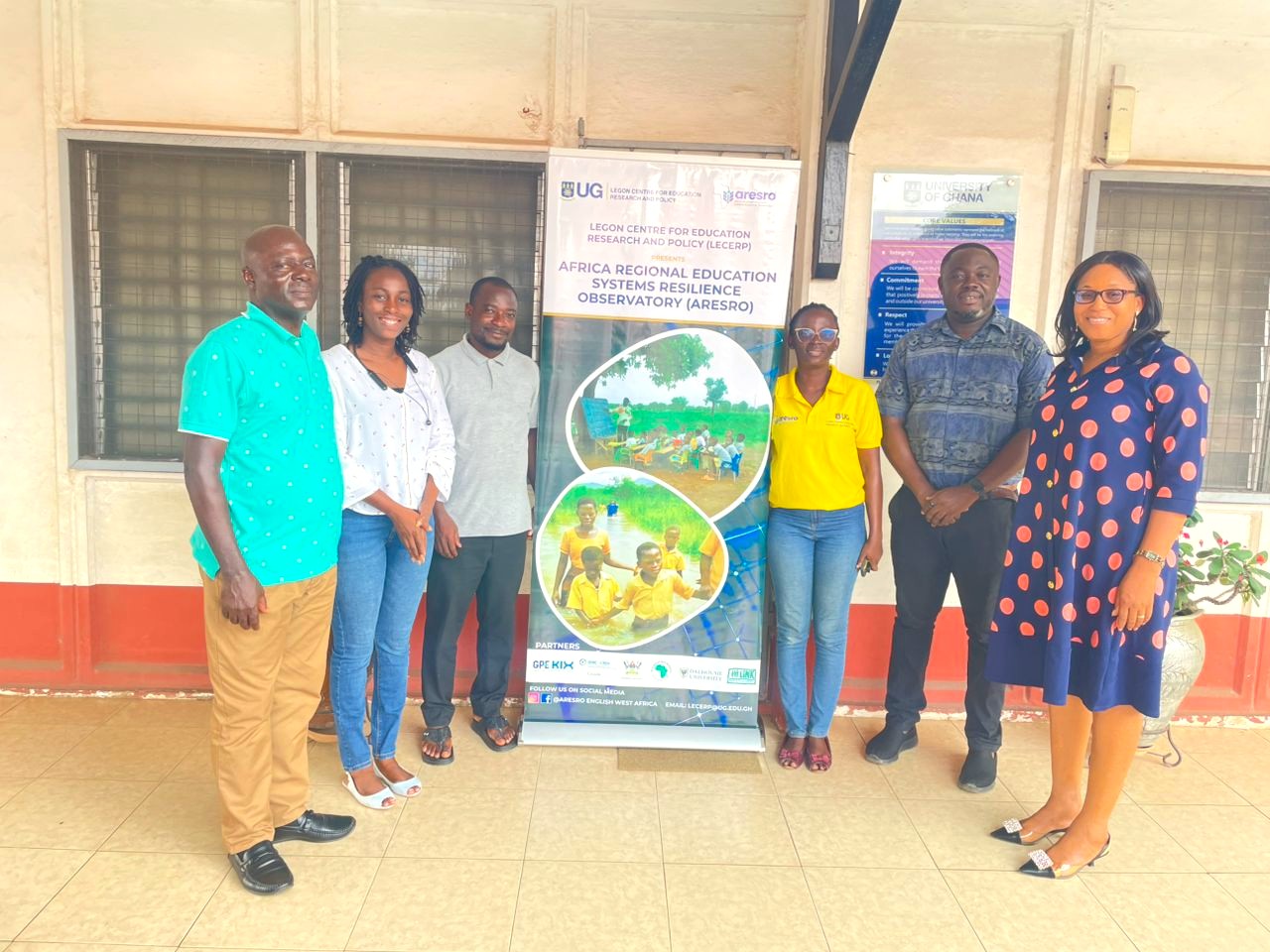
The Legon Centre for Education Research and Policy (LECERP) organized a training session for enumerators as part of preparations for the Formative Assessment Phase of the Africa Regional Education System Resilience Observatory (ARESRO) project. The session, which was held on 16th October 2025 at the University of Ghana, brought together experienced enumerators who will engage key education stakeholders across the country to explore their understanding and experiences of education system resilience.
In his opening remarks, Dr. Frank Otchere, Co-Principal Investigator of the ARESRO project, highlighted the importance of the initiative and its anticipated impact on strengthening education systems across the continent. He explained that the ARESRO project is a collaboration between LECERP and the Resilient African Network (RAN), based at Makerere University in Uganda, with funding from the International Development Research Centre (IDRC) under the GPE-KIX programme.
According to Dr. Otchere, the overarching goal of the project is to gain deeper insight into how stakeholders understand, conceptualise, and practice education system resilience in Africa. He noted that threats to education systems in Africa are multifaceted, ranging from climate-related events such as floods, heatwaves to epidemics, pandemics, and community-level challenges that adversely affect school attendance, enrollment, and learning outcomes.
“Some of these shocks are visible and make the news headlines, while others are silent but have equally profound effects on education systems,” he said. “Through this project, we hope to better understand these threats and identify ways to mitigate them, so that our education systems can continue to function seamlessly, even in times of crisis.”
He emphasized the need for the enumerators to uphold a high standard of excellence throughout the fieldwork, adhere strictly to all ethical guidelines, and ensure accurate data collection. “This is a very important exercise that will have lasting effects on education policies, if not for us directly, then for our children and grandchildren. Let’s approach it with the seriousness it deserves,” he stated.
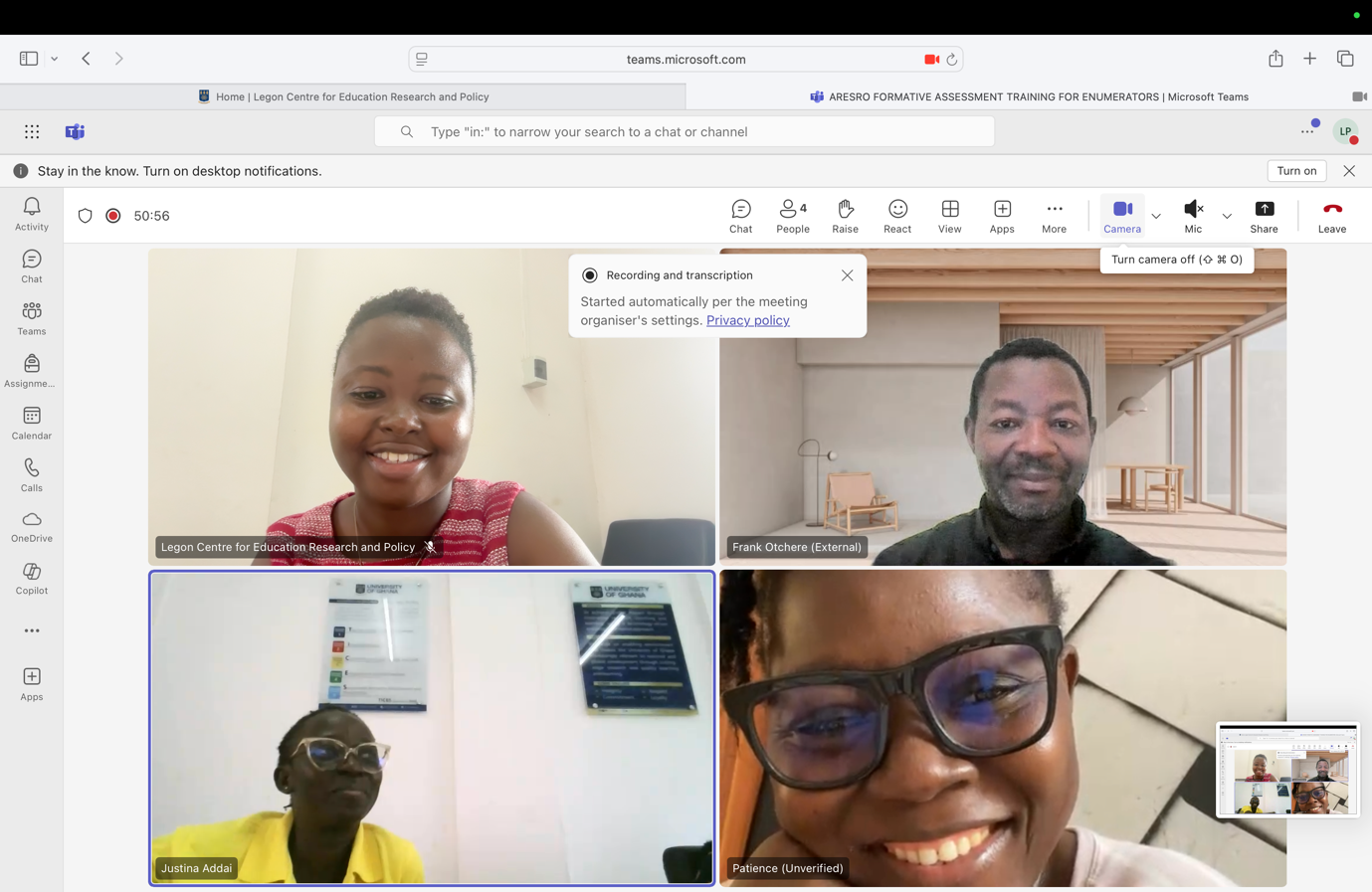
Dr. Joyce Anku, a Co-Investigator, also emphasized the importance of adhering strictly to ethical protocols throughout the research process. She underscored the need for enumerators to always ensure anonymity and confidentiality. Dr. Anku further encouraged them to keep participants fully engaged during discussions and to be mindful of cultural sensitivities and language translation challenges that may influence data collection and interpretation.
The training, which was held in hybrid mode, included role plays and practical exercises, allowing participants to simulate real-life field scenarios and apply the tools and ethical principles discussed. These interactive sessions not only deepen understanding but also help build the enumerators’ confidence ahead of the fieldwork.
The collection of data will be carried out among key education stakeholders, including the Ministry of Education, Ghana Education Service, UNESCO, UNICEF, ActionAid, NADMO, Ghana National Education Campaign Coalition (GNECC), Red Cross Society, World Vision International, Ministry of Gender, Children and Social Protection, and Plan International. The field activities will take place in the Kwahu Afram Plains South District, Ada East District, Bawku Municipal District, and Keta Municipal District.
As the project transitions into the formative assessment phase, insights from the interviews and focus group discussions will generate valuable evidence to inform education policy and strengthen education system resilience across Africa.