
Differentiated learning in Ghanaian Basic schools project
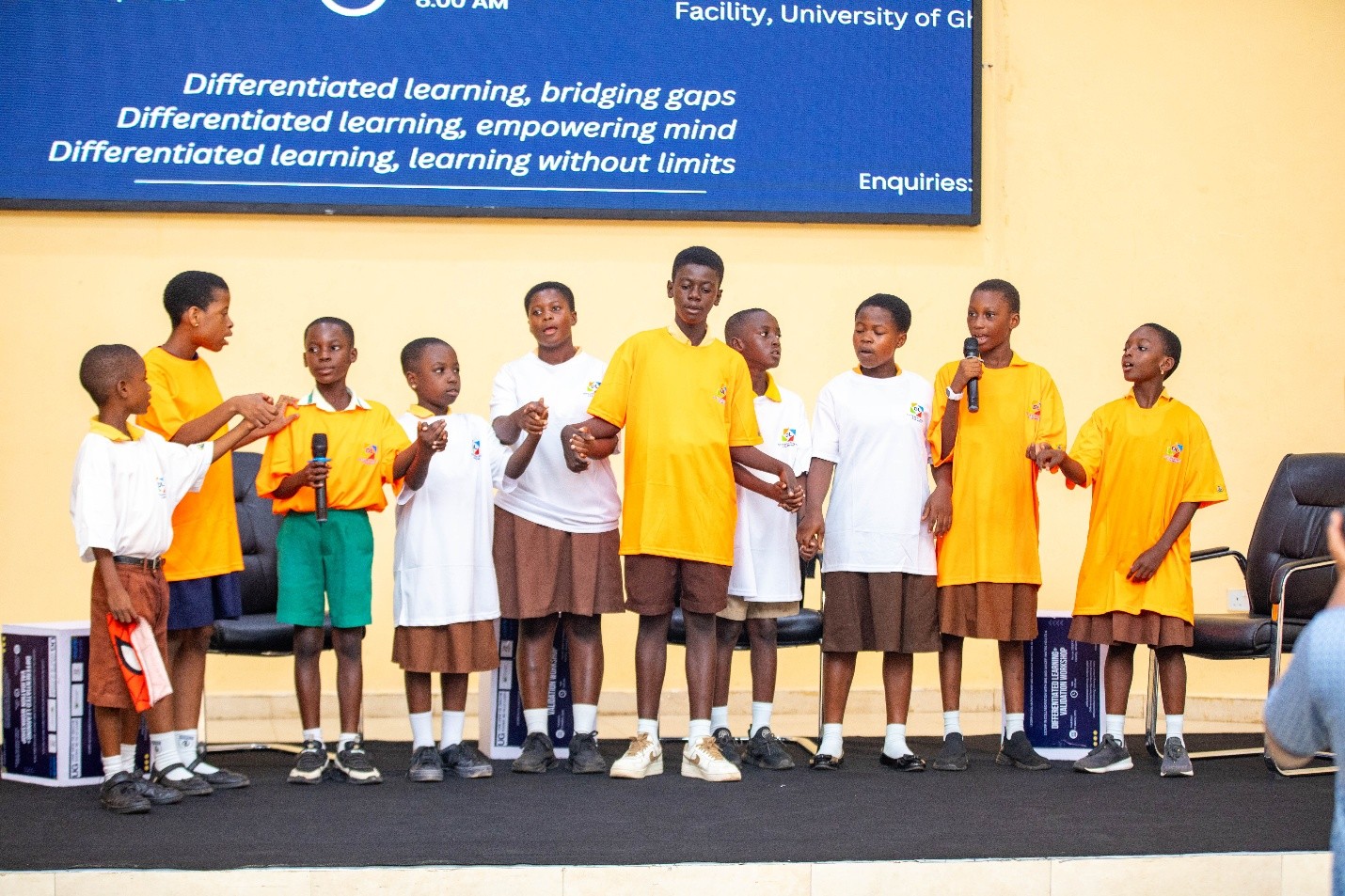
The Legon Centre for Education Research and Policy (LECERP), in partnership with the Ghana Education Service (GES) and UNICEF, has completed the endline impact evaluation of the Differentiated Learning (DL Plus) programme which commenced in 2023. The Differentiated Learning (DL+) in Ghanaian Basic Schools Project is a flagship initiative designed to address the persistent learning crisis within the country’s basic education system. The programme delivers remedial support to primary school learners by embedding teacher-led differentiated instruction into the existing education structure. It aims to equip teachers with the knowledge and skills necessary to help learners enjoy and improve in English Language and Mathematics.
Research underscores the urgency of this intervention. Studies show that more than 80% of children in Ghana complete primary school without foundational literacy and numeracy skills, leaving many unable to read simple sentences or perform basic arithmetic (UNESCO, 2023). The 2016 National Education Assessment (NEA) revealed that only 25% of Primary Six pupils and 22% of Primary Four pupils were proficient in Mathematics, while 37% demonstrated proficiency in English. Rural–urban disparities remain stark: in 2016, just 14% of rural Primary Four pupils and 18% of rural Primary Six pupils were proficient in Mathematics, compared to 33% and 34% of urban pupils. Similarly, only 26% of rural Primary Four pupils and 24% of rural Primary Six pupils were proficient in English, compared with 54% and 56% among their urban peers.
To close these gaps, the DL programme enables learners to progress at their own pace through a multifaceted approach that integrates Targeted Instruction, Play-Based Methodologies, and Universal Design for Learning (UDL) principles. These strategies promote inclusion and create equitable learning opportunities in Ghanaian classrooms. By focusing on literacy and numeracy, the programme provides a holistic learning experience tailored to individual needs. It emphasizes personalized learning—teaching according to learners’ ability levels rather than strictly following grade-level expectations.
The programme offers teachers continuous training and resources aligned with pupils’ learning levels. It also provides sustained mentoring, coaching, and monitoring support, alongside family and community engagement initiatives that help strengthen classroom instruction and improve learning outcomes for millions of Ghanaian children.
Specifically, the DL programme seeks to:
Enhance the capacity of district-level education actors (District Directors, Focal Persons, and SISOs) with leadership, mentorship, and coaching skills in foundational literacy and numeracy to support Ghana’s standards-based curriculum.
Deliver teacher professional development for basic school teachers and headteachers on DL approaches, and on foundational literacy and numeracy theories, concepts, and practices aligned with the curriculum.
Equip teachers with differentiated learning content and methods, and regularly monitor their progress against standards for quality DL instructional delivery.
Train teachers to use regular (termly and monthly) diagnostic and formative assessments in literacy and numeracy to guide DL delivery and inform classroom practice.
Build teachers’ capacity to use adequate, age-appropriate teaching and learning materials (TLMs), including improvised low- and no-cost materials that support foundational learning and DL outcomes.
Build or foster strong relationships with parents and communities to strengthen pupil’s knowledge, skills, and core competencies in foundational literacy (reading) and numeracy (computational thinking), as outlined in Ghana’s standards-based curriculum for Basic 2 – Basic 6 pupils, including children with disabilities and girls in marginalized communities.
Increase access to and availability of adaptable TLMs that support DL implementation and address the needs of all learners.
Build a model that enhances DL pedagogy and improves learning outcomes for P2–P6 learners, including children with disabilities and girls.
Supported by UNICEF, with funding from the Jacobs Foundation, and implemented by the Ministry of Education and GES, the DL programme is expected to benefit more than 100,000 teachers and School Improvement Support Officers (SISOs), and reach over 2.5 million students nationwide between 2023 and 2027.
LECERP has conducted three waves of assessment—baseline, midline, and endline—in 55 districts and 320 schools. The evaluation employs both quantitative surveys and qualitative methods, including key informant interviews, in-depth interviews, and focus group discussions with headteachers, teachers (particularly at the Basic 2 and Basic 4 levels), SISOs, district DL focal persons, parents, and community members.
Through this comprehensive and collaborative effort, the Differentiated Learning Programme continues to make significant strides toward transforming foundational learning, ensuring that every child in Ghana learns effectively, inclusively, and at their own pace.
The study is being led by Dr. Clement Adamba, Director of the Legon Centre for Education Research and Policy.